
Анализ возможности минимизации воздействия кормовых микотоксинов на птицу с помощью сложных эфиров кремния
Анализ возможности минимизации воздействия кормовых микотоксинов на птицу с помощью сложных эфиров кремния
Аннотация
Статья посвящена эффективности использования двух разновидностей кремнийорганических соединений для профилактики и смягчения токсического эффекта, вызванного вторичными метаболитами плесневых грибов при повышенном содержании в комбикорме трех наиболее распространенных микотоксинов: Т-2-микотоксина, дезоксиниваленола (вомитоксина) и фумонизина. Работу выполняли на цыплятах-бройлерах. По принципу аналогов было сформировано 8 групп (2 контрольные и 6 опытных) по 30 голов в каждой. Кормление птицы осуществляли вволю (ad libitum) сухими сбалансированными комбикормами с параметрами питательности, соответствующими рекомендуемым нормам кормления. Продолжительность опыта составила 5 недель (35 дней). Микотоксины вводили в комбикорм в виде фунгальной биомассы на основе кукурузы, содержащей все три культуры гриба-продуцента с токсическими продуктами их жизнедеятельности, а также путем включения в кормосмесь выделенных и очищенных в лабораторных условиях экстрактов соответствующих микотоксинов. Включение в основной рацион в качестве биологически активной добавки двух компонентных разновидностей кремнийорганических соединений в количестве 40 г/т обеспечивает высокую сохранность птицы и оказывает выраженный положительный эффект на основные показатели продуктивности (живую массу) цыплят-бройлеров.
1. Introduction
According to phytosanitary monitoring data, in Russia more than 60% of investigated commercial batches of cereal crops coming for sale or put in storage are contaminated with complex toxigenic (mycotoxin-producing) fungi. A significant part of grain lots is contaminated with mycotoxins , , , .
Currently, more than 400 species of mycotoxins produced by different species of fungi are known. Mycotoxins are detected in various crops at different technological stages of cultivation in the field, as well as during storage and at the stage of grain processing into feed , , .
Toxigenic mold fungi can produce mycotoxins in feed raw materials and forages at different temperatures in the substrate, substrate humidity, and air humidity. For example, one of the most dangerous mycotoxins, T-2-toxin, is produced by the mold fungus Fusarium sporotrichioides at temperatures from 4 to 15°C and 75% air humidity; deoxynivalenol — at temperatures from 18 to 29°C; zearalenone — at temperatures from 15 to 30°C and substrate humidity 45–50%; aflatoxins — at temperatures from 27 to 30°C and substrate humidity 18% , , , , The production of mycotoxins by mold fungi can increase in response to the use of chemical plant protection products and chemical preservatives for feed.
Contamination of crops with mycotoxins in the field and grain lots during storage is diagnosed in different regions of Russia. Mycotoxins are often detected in feed in amounts of 2–3 species. It is known that mycotoxins can act in synergy with each other, producing toxic effects in concentrations lower than the MPC for each of the mycotoxins separately , .
The main source of mycotoxins for broilers is cereals (wheat, corn, barley, etc.). Poultry farms in Russia use both domestically produced and imported grain. Quality control laboratories at feed mills and veterinary laboratories diagnose only 6 mycotoxins. Control methods in laboratories are based on various modifications of immunoenzyme analysis. More accurate (and more complex) methods of analysis — based on chromatography and mass spectrometry, which allow detecting from several tens to several hundreds of mycotoxins, are practically inaccessible to broiler poultry farms. It can take up to a month or more from sampling to analysis. Data on mycotoxin content are often received by poultry farms when a batch of grain has already been fed: broiler rearing cycles are no more than 35–44 days .
Thus, it is possible to formulate several potential threats from mycotoxins to broiler production:
- high probability of contamination of cereals with mycotoxins;
- absence of MPC (maximum allowable concentrations) standards for most mycotoxins;
- synergistic effects of mycotoxins detected in feed at concentrations lower than the MAC (maximum allowable concentration).
One of the solutions to prevent mycotoxicosis in broilers is the use of specialized feed additives such as:
- mycotoxin sorbents;
- probiotics;
- immunomodulators.
Sorbents are used for irreversible binding and excretion of mycotoxins from the poultry organism. Probiotics are used to relieve dysbacteriosis caused by mycotoxins. Immunomodulators are used to relieve the immunosuppressive effect of mycotoxins . A number of bacteria, which are the basis of probiotic preparations, may have the ability to transform some mycotoxins, such as T-2 and DON, into safe compounds.
A promising solution is the use of complex preparations with the following properties in broiler feeding:
- high indices of true sorption (sorption-desorption);
- biotransformation of mycotoxins into safe compounds;
- removal of immunosuppressive effect of mycotoxins.
Poultry enterprises due to acute sensitivity of poultry to toxic producers of mold fungi contained in feed have a significant risk of productivity loss and death. This circumstance was a prerequisite for conducting a scientific and production experiment to identify the possibility of neutralizing the toxic effect while minimizing or eliminating the use of antibiotics and antifungal drugs , .
Among the biologically active compounds with potential efficiency for solving the above problem of special interest are organosilicon preparations silatrans — intra-complex tricyclic silicon esters of triethanolamine with the general formula RSi(OCH2CH2)3N and their derivatives. Some of them have such a wide range of biological activity that they have found applications in animal husbandry, poultry farming, practical entomology, medicine, cosmetology, and crop production , .
They possess antibalastic, antisclerotic, adaptogenic, antipyretic, bactericidal, fungicidal, insecticidal and insectorepellent action. Biological activity of silatrans is determined by the nature of silicon atom, peculiar shape and electronic structure of their molecule. The wide range of biological activity of silatranes as new-type biostimulants allows their successful use in a wide variety of agricultural fields .
The drug (hereinafter referred to as the "Drug") is based on the organosilicon compound 1-chloromethylsilatran and a substance with auxin activity — triethanolammonium salt of orthocresoxyacetic acid. The selected component composition of synergistically interacting compounds and optimal quantitative ratio of ingredients determines a wide range of the drug action and high physiological activity.
The drug is used in small amounts – about 0,005 g/kg body weight with drink or feed. For poultry, the most acceptable way to use the drug is to include it as a feed additive in mixed fodder or premixes.
Purpose of the work — the aim of the work is to study the efficiency of using two varieties of "Preparat" for prevention and "mitigation" of toxic effect caused by secondary metabolites of mold fungi at increased content in mixed fodder of three most common mycotoxins: T-2-mycotoxin, deoxynivalenol (vomitoxin) and fumonisin.
2. Research methods and principles
A series of experiments were conducted in the vivarium to fulfill the task. The work was carried out on broiler chickens of the cross "Cobb-500", from which 8 groups (2 control and 6 experimental) of 30 heads each were formed according to the principle of analogs. The birds were fedad libitum with dry balanced mixed fodders with nutritional parameters corresponding to the recommended feeding norms. Up to 5 days of age chickens of all groups received "zero" diet, from 6 days of age — experimental feed mixtures. The conditions of poultry housing corresponded to the accepted zoohygienic parameters. The duration of the experiment was 5 weeks (35 days).
Taking into account the pronounced positive properties of the studied "Preparation", capable of stimulating the growth of poultry, i.e. acting antagonistically to the negative influence of mycotoxins, a scientific study synchronized in time and integrated into the general scheme of the experiment was carried out (Table 1).
The control group (group 4) received a balanced diet with mycotoxins in feed (Op2) causing a marked decrease in poultry productivity (DON – 10 mg/kg [5.5 MAC], T-2-mycotoxin — 800 mg/kg [8.0 MAC] and fumonisin — 10 mg/kg [2.0 MAC]).
Table 1 - Experiment scheme
Effect on performance and metabolism of broiler chickens, C = 40 g/t | Reduction of the negative effect of toxic producers of mold fungi, C = 40 g/t and C = 60 g/t | ||
groups | feeding peculiarities | groups | feeding peculiarities |
1. Control-1 (K1) | Basic diet without mycotoxins with nutritional parameters corresponding to the recommended norms of VNITIP (Oр1) | 4. Control-2 (K2) | Basic diet with nutritional parameters corresponding to the recommended norms, with a mixture of mycotoxins: t-2-mycotoxin (0.8 mg/kg), don (10 mg/kg) and fum (10 mg/kg) - OR2 |
2. Experimental-1 | Ор1 with 40 g/t "Preparat" (D1) | 5. Experimental-3 | ОР2 with 40 g/t "Preparat" (D1) |
3. Experimental-2 | Ор1 with 40 g/t "Preparat" (D2) | 6. Experimental-4 | ОР2 with 40 g/t "Preparat" (D2) |
- | - | 7. Experimental-5 | ОР2 with 60 g/t "Preparat" (D1) |
- | - | 8. Experimental-6 | ОР2 with 60 g/t "Preparat" (D2) |
Mycotoxins were introduced into the mixed feed in the form of corn-based fungal biomass containing all three fungus-producer cultures with toxic products of their life activity, as well as by including extracts of the corresponding mycotoxins isolated and purified in laboratory conditions into the feed mixture. In addition to the above-mentioned producers, the diet did not contain background amounts of any other xenobiotics. Both studied varieties (D1 and D2) of the drug in the same amount (40 g/t) were introduced into the fodder of chickens of the 3rd and 4th experimental groups (groups 5-6), similarly to the first experiment, and to study the increase in the efficiency of the complex "Preparat" at latent course of toxicosis, experimental birds from the 5th and 6th groups (groups 7 and 8) were fed a similar diet (Op2), but the level of input of both varieties of "Preparat" in mixed fodder was increased 1.5 times (up to 60 g/t) [48+12 and 54+6 g/t].
At the end of the rearing period, balance experiments were conducted to study the digestibility and utilization of diet nutrients. For this purpose, 3 heads (♂) of broiler chickens from each group were selected at 5 weeks of age. The balance experiment was divided into two periods: the preliminary one lasted 5 days, and the accounting one — 3 days. The amount and chemical composition of consumed feed and excreted droppings were recorded individually for each bird.
At the end of the experiment physiological and biochemical studies were carried out. To perform the planned volume of analyses, the birds were decapitated at 36 days of age, 6 birds (3♀+3♂) from each group. Blood, 12-intestinal chyme and liver samples were taken at the time of slaughter.
3. Indicators to be taken into account
Zootechnical:
- the safety of livestock (by daily accounting of the fallen bird and finding out the causes of death);
- live weight at the age of one day, three and five weeks (by individually weighing the entire livestock);
- average daily increase at the end of the growing period;
- average daily feed intake (by daily accounting by groups);
- feed costs per 1 head and per 1 kg of live weight gain of meat chickens (at the end of the growing period).
The content of mycotoxins in the feed is determined by the method of solid–phase competitive enzyme immunoassay (ELISA).
Physiological and biochemical:
- digestibility and use of feed nutrients (SP, CJ, SCl, BEV, ash, N and VE);
- activity of digestive enzymes – by methods of B.D. Kalnitsky, active acidity (pH) — by potentiometric method and the ratio of fractions in the chyme of the 12-peritoneum — by weight method;
- amino acids (free) of blood plasma — by ion-exchange chromatography on an automatic analyzer "AAA-399";
- total protein in blood plasma — by biuret method;
- nucleic acids (DNA + RNA) in the liver – by the method of I.P. Simakov;
- blood plasma glucose — glucose oxidase method;
- total cholesterol — by Ilk method;
- pyruvic acid in the liver — by the method of B.I. Antonov;
- hematologic indices (blood hemoglobin — by the cyanmethemoglobin method; erythrocytes — by the method of counting in Goryaev chamber;
- hematocrit number — by centrifugation of blood in capillaries; resistance of erythrocyte wall to hydrochloric acid);
- indices of nonspecific resistance (blood plasma lysozyme — by turbidimetric method;
- bactericidal activity of blood plasma — by method of O.V. Smirnova and T.A. Kuzmina; titer of natural (normal) agglutinins (against E.coli) — by agglutination reaction — by method of V.M. Mityushnikov);
- malonium dialdehyde of blood plasma — by the method of E.N. Korobeinikova;
- thiol (SH-) and disulfide (SS) compounds in blood plasma — by V.V. Sokolovsky's method.
- glutathione-S-transferase of blood hemolysate — by the method of V.A. Galochkin.
Biometric processing of the digital material obtained in the experiments was carried out by the method of variation statistics using a personal computer and Microsoft Excel 9.0 program.
4. Results
The results of rearing birds up to 5 weeks of age (Table 2) showed that the safety of livestock both in the 1st control group (group 1) and in both experimental groups (groups 2 and 3), receiving one or another variety of "Preparat" in the amount of 40 g/t, was at a fairly high level (96.7–100 %) and did not depend on the dose of inclusion of drugs in mixed feed.
However, in the presence of mycotoxins in the diet of broiler chickens (group 4), the safety of the stock, compared with peers from the 1st control group (group 1), fell sharply — by 20.0% (P ≤ 0.02). The main mortality (18 heads for 21 days, or 65% of all dead) was observed mainly in the first period of rearing. In general, physically weak (dystrophic) chicks dominated the wastage. Most of them (20 out of 28, or 70%) showed pathological and anatomical changes characteristic of this form of combined mycotoxicosis: extensive hyperemia and caseous necrotic lesions of the oral cavity and goiter, hyperemia and enlargement of the liver, numerous hemorrhages on the mucous membranes of the gastrointestinal tract, and edema in the lungs.
Preservation of experimental birds, which received mixed fodders with 40 and 60 g/t of the first variety of "Preparat" (D1), against the background of consumption of mycotoxin-contaminated mixed fodders (group 4), increased by 3.2 and 6.6%, respectively, depending on the level of inclusion of the tested preparation in the feed mixture. At the same time, its other variety, containing a larger amount of cresacin (D2), at a similar level of input into the diet (40 and 60 g/t), caused a much more pronounced increase (by 10 and 13.3%) in the safety of chicks, compared to the negative (K2) control group, which, in turn, were inferior only by 10.0 and 6.7 % to the similar indicator of the 1st control group (K1).
Live weight of 3-week-old chickens (Table 2) receiving the biologically active supplement "Preparata" against the background of "pure" diet (groups 2 and 3), with a slight tendency to increase (by 1.3 and 3.7%), objectively remained at a comparable level with the control. When broilers consumed mixed fodders affected by mycotoxins (group 4), their weight decreased significantly (by more than 17.0%, P ≤ 0.01), which from the zootechnical point of view is quite consistent with the nature of changes characteristic of the associative-synergistic effect of all three mycotoxins (T-2-mycotoxin, DON and fumonisin) on the poultry organism.
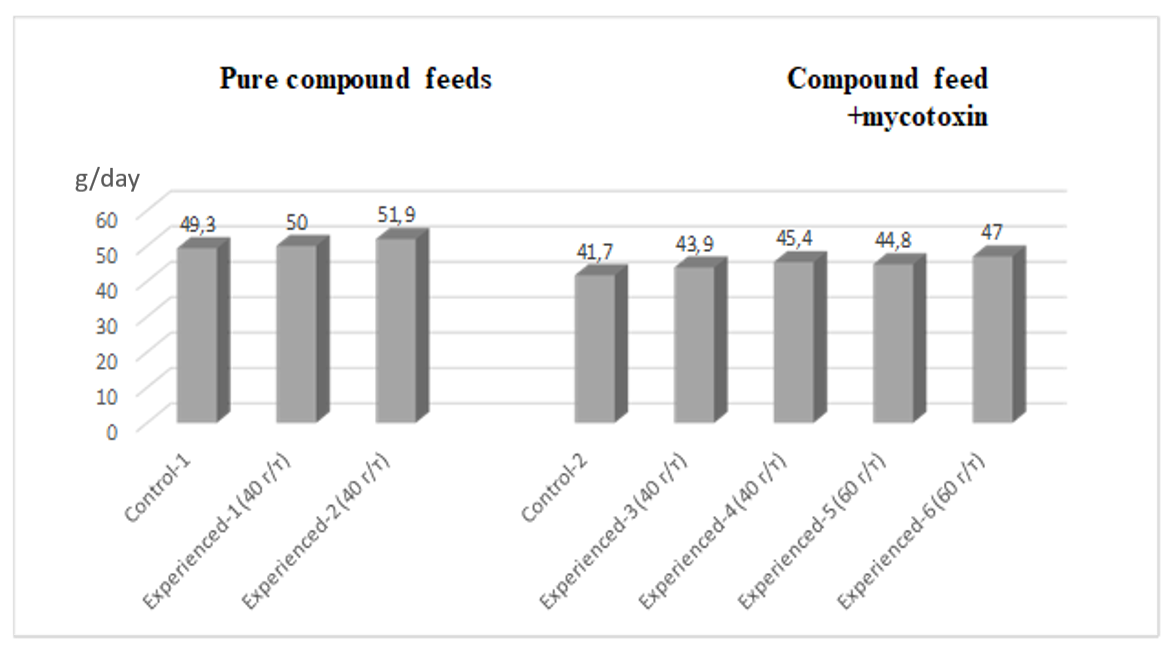
Figure 1 - Change in average daily gain when including two varieties of "Preparat" in clean and mycotoxin-contaminated feeds
Thus, the mass of experimental broilers raised on "pure rations" (groups 2 and 3) with the inclusion of the "Drug" turned out to be 1.3 and 5.3% higher (the differences are unreliable) and corresponded to the standards of the cross. The group of chickens receiving a diet with mycotoxins (group 4), as before, had (P £ 0.01) the lowest weight (1461 g). The varieties of the tested drug used, included in contaminated poultry feed at the level of 40 g/t (groups 5 and 6), increased the values of the indicator under consideration by 5.1 and 8.7%, compared with the negative control group (group 4), but their live weight, as at the first weighing, remained significantly (by 10.9 and 9.2%, P £ 0.10 — 0.05) lower than that of peers from the 1st group.
Table 2 - Zootechnical parameters of broiler chickens growing at inclusion of two varieties of "Preparat" in clean and mycotoxin-contaminated mixed fodders
Indicators | Composite feed with "Preparat" 40 g/t without mycotoxins | Fodder with mycotoxins and "Preparat" (5-6 groups 40 g/t, 7-8 groups 60 g/t) | ||||||
1 (C) | 2 (D1) | 3 (D2) | 4 (C) | 5 (D1) | 6 (D2) | 7 (D1) | 8 (D2) | |
Safety during the growing period, % | 96,7±3,3 | 100,0±0,0 | 96,7±3,3 | 76,7±7,73 | 80,0±7,32 | 86,7±6,2 | 83,3±6,81 | 90,0±5,5 |
Live weight of 3-week-old chicks, g | 832,8±32,2 | 843,7±29,8 | 853,9±31,2 | 690,0±36,74 | 704,9±35,13 | 743,4±40,21 | 722,1±30,73 | 761,2±37,1 |
Live weight of 5-week-old hens, g | 1658,3±53,9 | 1680,0±44,2 | 1738,0±48,2 | 1396,8±52,84 | 1474,8±33,44 | 1517,2±52,31 | 1515,2±60,11 | 1581,6±42,61 |
Live weight of 5-week-old cockerels, g | 1791,9±65,1 | 1818,0±51,9 | 1896,1±48,2 | 1525,4±61,24 | 1596,7±91,31 | 1660,0±48,21 | 1618,1±63,01 | 1706,5±72,91 |
Average live weight (50%♀+50%♂), g | 1725,1±59,5 | 1749,0±48,1 | 1817,0±48,2 | 1461,1±57,04 | 1535,8±62,42 | 1588,1±50,311 | 1566,7±61,61 | 1644,0±57,82 |
Note: here and further, upper and lower indices 1...5 denote thresholds of reliability for P ≤ 0.10 ... P ≤ 0.001, upper indices - in comparison with the individual control in each experiment, lower indices – in comparison with the 1st control group
5. Discussion
One and a half times increase in the level of "Preparat" input into contaminated feed mixtures (up to 60 g/t) was accompanied, although more pronounced, but not directly proportional (1.5 times) effect: the weight of experimental birds increased by 7.2 and 12.5% (P ≤ 0.05), but also, as in the previous groups, did not "reach" similar values of the 1st control group. Thus, the presence of significant differences in live weight between control (diet without "Preparat" and mycotoxins) and experimental groups indicates that the effect of the studied levels (40 and 60 g/t) of complex "Preparat" objectively was insufficient for complete (absolute) elimination of the toxic effect caused by the introduction of high levels of xenobiotics (mycotoxins) into mixed fodder.
However, a significant increase in live weight of birds (in both age periods), as well as a significant decrease in the level of mortality of the stock, undoubtedly served as a vivid confirmation of the ability of "Preparat" to mitigate the combined form of chronic T-2-, vomi- and fumonisin toxicosis in chickens of both 3 and 5 weeks of age.
The use in similar dosages of a variant of the preparation with a higher (90%) content of triethanolammonium salt of orthocresoxyacetic acid (D2) in all cases promoted the manifestation of a more pronounced positive effect (by 3.0–5.5%) than with the use of another analog — D1, containing in its composition more biosilicon-organic compound (20% mival — D1). Thus, chickens consuming mixed fodder with this type of "Preparat" (D2) differed in appearance for the better from their peers from control groups.
These differences were especially evident between broilers of the negative control group (group 4) and experimental birds from the last experimental group (group 8). If the former showed unnatural position of wings, ruffled plumage; the bird was depressed, unsteady on its feet, reluctant to move, the latter showed no such symptoms of mycotoxicosis visually. Chicks were distinguished by exceptional mobility, good appetite and clean feather cover.
In chickens fed diets with mycotoxins (group 4), the imbalance between the exposure to prooxidant factors and the functional capabilities of the physiological antioxidant system led to excessive non-enzymatic free-radical oxidation, resulting in a sharp decrease in the level of thiols (by 39.8%, P ≤ 0.01) (Table 3).
In turn, activation of POL in animals often leads to excessive accumulation of disulfides in the liver (oxidized glutathione and cysteine) and their release into the blood. This was observed in our case: the concentration of SS-groups increased almost 1.5-fold (P ≤ 0.02) in birds fed with poor quality feeds, and the thiol disulfide ratio, which seemed reasonable to us to determine for evaluation of free-radical pathology, decreased more than 2.4-fold. Such a situation indicates a pronounced pathology, since the increased content of disulfide compounds in blood plasma often causes oxidation of thiol groups of plasma proteins or proteins of lateral-free membranes of tissue cells and their inactivation. The introduction of the studied varieties of "Preparat" into contaminated poultry mixed fodder contributed to the overall improvement of the situation.
Thus, with a regular and reliable increase in the content of SH-, a decrease in the concentration of SS-groups was observed. However, the concentration of sulfhydryl groups in the serum of chickens of the experimental groups (groups 5–6 and 7–8) was still very low.
Not considering the "protein factor", the activity of selenium-containing enzyme glutathione-S-transferase helps to shed light on this situation, which in these groups (groups 5–8) highly significantly increased in 2–2.5 times (P ≤ 0.001) in comparison with poultry from the 1st experimental group (group 1) and with chickens receiving "Preparat" on the background of "pure" mixed fodders (groups 2 and 3).
It is known that GST catalyzes the reaction between glutathione and many electrophilic metabolites of xenobiotics, increasing the hydrophilicity of ligands and facilitating their excretion by the liver. Glutathione-S-transferase, interacting with glutathione, promotes its ionization to glutathione thiolate ion (GS-), which nucleophilically attacks the electrophilic atom of the xenobiotic, thus converting it into an oxidized tripeptide (GSSG).
Table 3 - Indicators of nonspecific resistance of the organism and deposition of fat-soluble vitamins
Indicators | Composite feed with "Preparat" 40 g/t without mycotoxins | Fodder with mycotoxins and "Preparat" (5-6 groups 40 g/t, 7-8 groups 60 g/t) | ||||||
1 (C) | 2 (D1) | 3 (D2) | 4 (C) | 5 (D1) | 6 (D2) | 7 (D1) | 8 (D2) | |
Processes of peroxidation | ||||||||
Malonic dialdehyde, mM/L | 2,54±0,32 | 2,50±0,14 | 2,12±0,49 | 3,89±0,192 | 3,39±0,102 | 3,22±0,47 | 3,33±0,231 | 3,18±0,1911 |
SS and SH groups: | ||||||||
Sulfhydryl C (-S-H), mM/L | 0,528±0,043 | 0,570±0,058 | 0,558±0,068 | 0,318±0,034 | 0,345±0,062 | 0,477±0,062 | 0,426±0,0213 | 0,483±0,024 |
Disulfide C (-S-S-), mM/L | 0,221±0,028 | 0,239±0,004 | 0,242±0,011 | 0,324±0,023 | 0,251±0,043 | 0,286±0,027 | 0,225±0,024 | 0,237±0,022 |
TDS (thiols/disulfides) | 2,40 | 2,38 | 2,31 | 0,98 | 1,38 | 1,67 | 1,89 | 2,04 |
Glutathione-S-transferase activity (Se), units. | 0,81±0,13 | 0,94±0,10 | 0,89±0,09 | 1,63±0,055 | 1,67±0,115 | 1,75±0,175 | 1,77±0,045 | 1,71±0,025 |
Nonspecific resistance of the body against microflora | ||||||||
Serum lysozyme, g/L | 4,7±0,2 | 4,6±0,5 | 5,0±0,3 | 3,6±0,15 | 3,8±0,8 | 4,1±0,212 | 3,9±0,5 | 4,3±0,4 |
Bactericidal activity of blood serum, % | 78,6±1,4 | 78,1±0,7 | 79,5±0,8 | 67,8±1,45 | 75,7±0,951 | 77,5±2,14 | 76,5±2,04 | 76,9±1,63 |
Activity of b -lysines, % | 25,8±2,3 | 24,5±3,5 | 29,4±3,0 | 19,6±1,21 | 20,2±1,31 | 23,3±4,1 | 21,3±2,4 | 23,5±2,2 |
Total immune proteins of blood serum, units. | 16,8±1,8 | 15,2±0,7 | 16,7±1,6 | 12,8±0,81 | 13,6±0,9 | 15,2±0,52 | 14,1±0,8 | 15,7±1,2 |
Normal antibody titer (РНА50), 1:Х, units | 322,0±47,1 | 329,6±60,0 | 335,1±75,4 | 259,6±82,1 | 276,9±53,2 | 289,8±25,9 | 282,4±91,4 | 301,4±48,6 |
Vitamin content of liver | ||||||||
Retinol (Vit A), mg% | 120,4±2,9 | 128,9±3,01 | 121,1±2,6 | 113,2±3,2 | 116,7±3,2 | 121,3±1,91 | 118,4±4,3 | 120,1±2,6 |
a- Tocopherol (Vit E), mg% | 19,7±2,6 | 20,0±4,1 | 20,0±5,4 | 13,4±1,22 | 16,0±1,8 | 16,8±1,8 | 17,3±3,4 | 19,7±2,3 |
The totality and comparison of the taken into account indicators, undoubtedly, indicated a compensatory strengthening of the processes of endogenous detoxification of mycotoxins in chickens under the influence of "Preparat", occurring without detrimental, or, more precisely, with comparatively less pronounced negative consequences for the organism. Apparently, the main reasons for the detected changes could be an increase in protein synthesis in the organism, in particular, in the apoenzyme component of protective enzymes (Table 6), as well as more efficient incorporation of biometallic cofactors into the active center of the enzyme due to better digestion of ash elements of the diet. It is not surprising that the values of "TDS" coefficient in chickens, which received mixed fodder with toxic micromycetes producers, improved (1.4–2.1 times, naturally approaching the initial level of the 1st control group ("pure" mixed fodder)), depending on the increase in the dose of drug input into the diet (from 40 to 60 g/t) and with more effective influence of D2. It is indicative that all chickens fed diets with the studied biostimulants were characterized by better indices of nonspecific resistance (Table 8). The activity of a number of humoral factors of antimicrobial defense of the organism (lysozyme and bactericidal activities of blood serum, as well as the titer of normal agglutinins against Collibacillosis) at the level of fuzzy trend increased on average by 5–15% (P ≤ 0.10–0.05). Taking into account the tense epizootic situation at poultry farms, this circumstance can also be entirely positive in case of industrial use of "Preparat" in mixed fodders for broiler chickens.
Component variant D2 showed itself as a more effective remedy for mycotoxicoses by most of the studied indicators: its use in poultry diets provided a positive effect only at the level of 40 g/t. Taking into account the fact that mycotoxicoses are widespread, and the problem of quality of feed raw materials from year to year rises with new force, it can be noted that the optimal levels of inclusion of complex "Preparat" both in free and in mycotoxin-contaminated mixed fodder will contribute to the reduction of production costs in the production of poultry meat.
6. Conclusion
Inclusion of two component varieties of "Preparat" in the main diet as a biologically active additive in the amount of 40 g/t provides high safety of birds and has a pronounced positive effect on the main indicators of productivity (live weight) of broiler chickens.
Biologically active "Preparat" (D2), included in the composition of feed not contaminated with mycotoxins at the level of 40 g/t, allows to significantly increase the efficiency of feed nutrient utilization and improve its digestibility by poultry compared to the control (group 1, without its application of "Preparat"). The consequence of which is a decrease in feed consumption by broilers during the productive period of their growing and an increase in the indicators of feed payment by products. According to the majority of the given indicators, the other component variety D1 is inferior to D2, but also has a positive effect on the productivity of poultry.
Inclusion of both varieties of "Preparat" at the level of 40 g/t in "pure" mixed fodders for broiler chickens promotes normalization of most metabolic indicators in the bird's body: protein biosynthesis processes are intensified, redox processes are optimized. Chickens receiving feed with "Preparat" (especially in the case of using D2), differ from the control group by higher indices of nonspecific resistance (resistance) to antigenic and metabolic factors, which is a physiological and biochemical basis for increasing broiler productivity.
The unique ability of components included in the complex "Preparat" to optimize and stimulate metabolic processes in the poultry body depressed under the influence of toxic microscopic fungi producers has been shown. At inclusion in the contaminated with trichothecene mycotoxins (T-2, DON and FUM) diet 40 and 60 g/t of the studied varieties of "Preparata" significantly increase the indicators of safety and average daily gain in live weight of broiler chickens. The efficiency of utilization of nutrients of the diet increases, which causes the improvement of most production indicators in broiler breeding compared to the control (contaminated with trichothecene mycotoxins T-2, DON and FUM diet without the studied additive).
Both components included in the "Preparat" (triethanolammonium salt of orthocresoxyacetic acid and 1-chloromethylsilatran) have a synergistic effect on the totality of physiological and biochemical indicators in achieving a positive effect. The action of the latter is 10-15 times less pronounced than that of the former.
Varieties of "Preparat" (D1 and D2), as well as the levels of their administration (40 and 60 g/t) in terms of their ability to correct the effects caused by mycotoxicoses, are distributed in the following sequence (min → max): D1 (40 g/t) — 36-49%; D2 (40 g/t) — 48–65%; D1 (60 g/t) — 58–73% and, finally, D2 (60 g/t) — 69–85%. The positive effect of the variety — D2, (60 g/t), expressed in a significant stimulation of metabolism, is the most effective, from a biological point of view, and contributes to a significant improvement of zootechnical indicators in the cultivation of broiler chickens suffering from chronic forms of mycotoxicosis.
Increasing the concentration of "Preparat" in the contaminated ration by 1.5 times (from 40 to 60 g/t) increases the positive effect by 1.1 — for D1 and 1.3 — for D2.
A variety of "Preparat" — D2, included in the ration at the level of 40 g/t, contributes to the reduction of production costs due to the negative effect of mycotoxins of feed.