
Predictor Potential Of Sorbitol Clearance In Assessing Liver Functionality In Animals
Predictor Potential Of Sorbitol Clearance In Assessing Liver Functionality In Animals
Abstract
The work is devoted to the study of the predictive potential of D-sorbitol clearance and the possibility of adapting the method of diagnosing hepatobiliary system disorders based on monitoring the clearance of this compound to the conditions of modern veterinary medicine.
Aim of this paper is to comprehensively analyze the available scientific information on the predictive potential of sorbitol clearance in modern veterinary and human medicine.
The main material for the analysis was information from peer-reviewed journals and scientific publications reflecting the latest achievements and trends in the field of study. The article presents statistical information on the world sorbitol market to indicate the availability, low cost, and prevalence of the studied product. The biochemical parameters of sorbitol metabolism are considered, including the polyol pathway of glucose conversion, the intermediate compound of which is D-sorbitol. A qualitative and quantitative assessment of the relationship of the test compound with various liver enzyme systems was performed to establish the informativeness of diagnostic methods using sorbitol clearance indicators. The paper also presents a comparative analysis of the results of experimental studies devoted to the study of the metabolic parameters of D-sorbitol in patients with liver pathology and in representatives of the control groups. The experience of domestic and foreign specialists confirms the high level of predictive potential of D-sorbitol clearance in the diagnosis of hepatobiliary system disorders. The diagnostic method for indicating liver pathologies of various origins by assessing the total, renal, and hepatic clearances of D-sorbitol has demonstrated positive results in experimental studies in the field of human medicine.
1. Введение
Sorbitol is a registered food additive, E420, having a sweet taste. Since the end of the 20th century, it has been actively used in human medicine as a sugar substitute for patients with diabetes mellitus due to the absence of hyperglycemia after its use . With the development of technological capabilities of modern science, side effects of sorbitol use in patients with diabetes mellitus were identified, and other ways of implementing sorbitol as an independent compound of the polyol group (polyhydric alcohols) in the aspect of natural science were discovered, which served as the basis for the emergence of innovative vectors in the fields of the pharmaceutical industry and diagnostics .
Liver function plays a critical role in animal health , , , . Liver function assessment is essential for the diagnosis and monitoring of diseases and for the development of effective therapeutic strategies , . One of the methods for assessing the functional state of the liver is clearance tests , , , , which study the liver's ability to metabolize and excrete various compounds. In this context, sorbitol, a monosaccharide, is of interest as a potential predictor of liver function , , .
The aim of this paper is to comprehensively analyze the available scientific information on the predictive potential of sorbitol clearance in modern veterinary and human medicine.
2. Materials and methods
The main material for the analysis was information from peer-reviewed journals and scientific publications reflecting the latest achievements and trends in the field of study. To determine the relevance of the theoretical study, a search was conducted in modern databases — PubMed, Scopus, Web of Science, and eLibrary. To structure and systematize the available information on the issue under study, methods of functional, dynamic, and statistical analysis, synthesis, modeling, and comparison were used, which made it possible to identify key patterns. The results of this work are presented in the form of thematic sections, ensuring a consistent perception of information and a more complete presentation of the analyzed data.
3. Results and discussion
According to estimates by foreign specialists from the IMARC Group company, the modern sorbitol market on the world stage demonstrates stable positive dynamics in terms of total annual production volumes. The quantitative indicators for the production of this product in 2024 were estimated at 2.76 million tons. IMARC Group predicts that the sorbitol market will exceed the 3.03-million-ton mark by 2033, with an average annual growth rate of 1.12% in 2025–2033 .
Currently, China has taken a leading position in sorbitol turnover, producing more than 32.5% of the volume of the studied market in 2024 . The key driver of increased global sales of this product has been its expanded use in the pharmaceutical industry. Currently, the structure of the sorbitol market, depending on the area of application, type, and raw materials, includes such product categories as cosmetics and hygiene products (21.1%), food industry products (18.3%), pharmaceuticals (35.9%), toothpaste (18.6%), industrial surfactants (5.8%), and others (0.3%) . A graphical representation of the segmentation of the studied market in 2024 is presented below (Fig. 1).
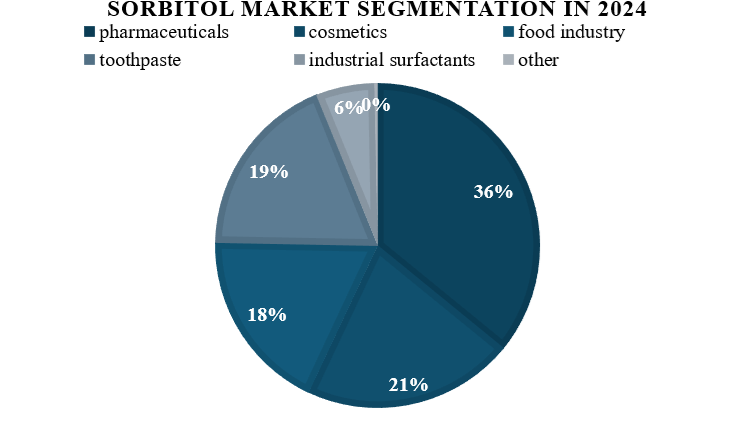
Figure 1 - Volume share of different product categories including sorbitol use in 2024
Note: based on [21]
In Russia, sorbitol was registered as food additive E420 , which functions as a sweetener, humectant, and emulsifier. The above properties of sorbitol are highly valued in the food industry, especially in the category of dietary products. In addition, sorbitol acts as an emulsifier and flavor corrigent in a relatively new dosage form — dental phytofilm . In toothpaste, sorbitol prevents drying due to its hygroscopic properties and acts as an additional anti-caries component . D-glucitol can be used in neurology as a metabolic therapy . Studies have also shown that sorbitol can be used as an effective stabilizer for vitamin solutions: a sorbitol concentration of 250 μg/ml of the stabilized solution is sufficient to significantly increase the stability of cyanocobalamin in the presence of thiamine and niacin . In veterinary medicine, sorbitol is widely used as an osmotically active agent. Here it is necessary to note the results of studies of the influence of mannitol and sorbitol on diuresis and saluresis of white outbred rats : the increase in diuresis in both cases under consideration has minor discrepancies, whereas the lowest level of excretion of K+ and Mg2+ ions in the urine was observed with the introduction of sorbitol, which indicates that this compound has potassium- and magnesium-sparing properties. Sorbitol is also included in the composition of semi-dry animal feed as a preservative (usually in a concentration of 0.01–0.2%) . Thus, based on the information provided, it is possible to identify the most common sources and routes of penetration of sorbitol into the bodies of humans and domestic animals. In the first case, sorbitol can be taken orally with feed and water, as well as with medicinal forms (dental films, syrups, tablets, dragees, etc.). In the second case, a small amount of sorbitol enters the body through the skin when using cosmetics with the addition of this substance as a moisture-retaining agent.
It is also necessary to designate the endogenous method of sorbitol accumulation in the mammalian organism — the polyol pathway of glucose conversion (the sorbitol aldose reductase pathway), activated in a state of hyperglycemia. The chain of polyol transformation of glucose is initiated by the reaction of reduction of the aldehyde group of glucose, the product of which is the hexahydric alcohol sorbitol. These processes are regulated by the enzyme aldose reductase, which has a high Km (the kinetic parameter of enzymatic reactions, numerically equal to the substrate concentration at which the reaction rate reaches half of the maximum), and the coenzyme of the reaction is reduced NADPH . The next stage of the polyol pathway is represented by the oxidation reaction of sorbitol at the second carbon atom to D-fructose with the participation of a catalyst — Zn²⁺-dependent sorbitol dehydrogenase (SDH). Under conditions of hyperglycemia, about 30% of glucose is metabolized via this chain of reactions , . It should be noted that the enzymes of the polyol pathway are not sensitive to insulin. The functional activity of these enzymes is directly determined by the availability of substrates: with an increase in the concentration of glucose, the rate of formation of sorbitol and fructose increases proportionally , .
It is worth noting that the rate of conversion of sorbitol into fructose is significantly lower than the rate of formation of sorbitol from glucose, which leads to the active accumulation of D-glucitol in the body's cells, since sorbitol does not have the ability to penetrate cell membranes. With significant accumulation in the cells of insulin-independent tissues, this compound leads to an increase in osmotic pressure in them (osmotic stress). This process underlies the pathology of the lens of the eye in patients with diabetes mellitus: due to osmotic edema, the ability of the lens to accommodate is impaired , . Interestingly, in the course of practical studies on animals with experimental diabetes, the role of sorbitol in the pathogenesis of diabetic complications was proven: disorders of peripheral nerve function and excessive increase in glomerular filtration rate were leveled by the use of sorbinil, an aldose reductase inhibitor, in such animals , .
In a state of hyperglycemia caused by various etiological factors, an increase in the metabolic flow of substrates along the polyol pathway simultaneously entails the activation of NADPH oxidase, an enzyme that catalyzes the reaction of reducing molecular oxygen to superoxide anion radical, which leads to the formation of a significant amount of free oxygen radicals. In the polyol pathway of glucose conversion, the consumption of NADPH increases, which, in turn, leads to the emergence of competition with glutathione reductase, which is involved in the reaction of glutathione reduction, and, as a consequence, to increased oxidative stress , .
It has been experimentally confirmed that aldose reductase and sorbitol dehydrogenase are key links in the pathogenesis of damage to cardiac muscle tissue: in an experiment with modeling ischemia in experimental rats with diabetes mellitus types I and II, increased activity of the indicated enzymes of the polyol pathway was recorded in animals , , . Inhibition of each of the enzymes of the polyol chain restores the content of macroergic compounds (in particular, ATP) and also normalizes the physiological level of intracellular cations (Na+ and Ca2+) in the tissues of the heart muscle of experimental animals.
The higher expenditure of energy resources (ATP) of the cell is due to the fact that endogenous fructose (a product of sorbitol oxidation in the polyol pathway) is phosphorylated in further metabolic transformations to form fructose-1-phosphate with the participation of keto-hexokinase (KHK; fructokinase), facilitating the activation of ATP consumption with the release of ADP. In parallel with this, the polyol chain of glucose transformations also initiates the breakdown of purine nucleotides, which leads to an increase in the concentration of uric acid (a product of purine breakdown), stimulating the expression of aldose reductase in endothelial cells, creating a kind of vicious circle.
The classic version of glucose metabolism in the mammalian organism involves its inclusion in the chain of glycolysis reactions, through which cells are provided with the energy of ATP bonds. At the first stage of such transformations, the glucose molecule is phosphorylated with the participation of the enzyme hexokinase.
The activation of the alternative (in this case, polyol) pathway of glucose conversion is explained by the characteristics of biochemical reactions catalyzed by enzymes: in the presence of a large amount of glucose, the active centers of all available hexokinase molecules are bound. Under these conditions, aldose reductase reacts to the excess substrate (glucose), joining the reaction of its reduction to sorbitol. Hexokinase, in turn, is also capable of returning glucose metabolites from the polyol chain to the glycolysis pathway by phosphorylating fructose to form fructose-6-phosphate (a direct participant in the glycolysis process) , . However, at high blood glucose levels, this does not occur due to oversaturation of the active centers of hexokinase.
About 80–90% of sorbitol, when administered exogenously, is metabolized in the liver and accumulates as glycogen, 5% accumulates in brain tissue, cardiac muscle, and skeletal muscles, and 6–12% of the substance is excreted in the urine . Since the liver is the central organ of sorbitol metabolism, there are significant prerequisites for adapting this compound to dynamic clearance tests for indicating pathologies of the hepatobiliary system , . In order to assess the predictive potential of sorbitol clearance, it is necessary to establish the informativeness of this method regarding liver pathologies.
Aldose reductase is an enzyme that initiates the polyol pathway of glucose conversion and participates in the reaction of hydrogenation of the glucose molecule to form sorbitol. It should be noted that this enzyme is not an organ-specific enzyme and is localized not only in liver cells (hepatocytes) but also in the lens and retina of the eye, Schwann cells of the peripheral nerves, placenta, and erythrocytes . In other words, the initial stage of the polyol pathway of glucose conversion to sorbitol can be carried out outside the hepatobiliary system. In this case, monitoring the level of sorbitol in the blood can only be used to indicate hyperglycemia of various origins, since with an excess of glucose not utilized by cells, aldose reductase reacts rapidly to the accumulation of a specific substrate, triggering a chain of polyol transformations.
Sorbitol dehydrogenase (SDH), on the contrary, belongs to the category of organ-specific liver enzymes and takes part in the reaction of the reversible conversion of sorbitol into fructose. The enzyme is localized directly in the cytoplasm of hepatocytes. In scientific literature it is noted that the serum activity of this enzyme increases in viral hepatitis and allows one to determine the severity of the pathology , . Usually, an increase in the functional activity of sorbitol dehydrogenase is recorded in the prodromal period of the disease, before the appearance of the jaundice symptom complex. In human medicine, there is information that in case of toxic liver damage, the level of sorbitol dehydrogenase can increase by 32.7 times . Changes in the level of SDH in the blood in other pathological conditions of the liver (cirrhosis, hypoxic liver damage) have not been sufficiently studied at the moment. In any case, the level of sorbitol makes it possible to assess pathologies of the hepatobiliary system and indicate functional liver failure, since the concentration of the indicator compound (sorbitol) will change in direct proportion to the enzymatic activity of the organ being studied .
Along with the previously described enzymes, enzymes of the cytochrome P450 (CYP450) family participate in drug metabolism. Using the digital service for predicting drug molecule metabolism points "SOMP" of the online platform "Way2Drug", an experiment was carried out using the in silico computer modeling method. The most probable sites of sorbitol molecule metabolism were determined for the isoforms CYP3A4, CYP2D6, CYP2C19, CYP2C9, and CYP1A2, as well as for the glucuronyl transferase (UGT) enzyme, which performs the function of conjugation of xenobiotics and indirect bilirubin in the liver.
In the early 2000s, studies were conducted in China to study the characteristics of the parameters of the functional activity of the human liver in cirrhosis. The experiment presented some parameters of the blood and urine of patients with cirrhosis, on the basis of which a conclusion can be made about the predictive potential of sorbitol clearance . The experimental procedure was as follows: a sterile, pyrogen-free 5% aqueous solution of D-sorbitol was administered intravenously at a constant rate of 50 mg/min. Equilibrium was reached after 2 hours of continuous infusion. Three blood samples were taken from a peripheral vein at approximately 15-minute intervals, 135 and 165 minutes after the start of the procedure. Urine samples were collected for 1 hour 120 minutes after the start of the infusion. The concentration of D-sorbitol in biological fluids was determined using high-performance liquid chromatography (HPLC) .
In patients with liver pathology, higher values of D-sorbitol concentration in the blood, its rate of excretion in the urine, and clearance in the kidneys were recorded compared to the control group. In turn, the value of the total clearance of the compound in patients with liver cirrhosis is lower than in the control group. The identified patterns can be used as a basis for diagnostic clearance tests of hepatobiliary system disorders in humans and also have the potential for adaptation in the field of veterinary medicine. The scientific publication notes that determining the total clearance of D-sorbitol is relevant when examining a patient before surgery. When the value of this parameter is below 600 ml/min (for humans), the risks of postoperative complications associated with the hepatobiliary system increase .
In human medicine, the identified patterns of D-sorbitol clearance are also confirmed in earlier studies . In the experiment, representatives of the control group and patients with liver cirrhosis were administered a bolus dose of the solution of the studied compound (5 mmol/kg) and also underwent an infusion of sorbitol (287 μmol/min). The results of the experiment showed a similar trend in the decrease in the values of hepatic clearance of the test substance in patients with cirrhosis compared to the values of the control group.
There are scientific data on the comparative assessment of D-sorbitol clearance in rodents when administered in the form of a bolus and in the form of an intravenous injection . In the experiment, the total plasma, renal, and extrarenal (hepatic) clearances of sorbitol were measured in a control group of mice and in mice with sepsis. The test compound was administered to each experimental group in two forms: as a bolus dose and as an intravenous injection.
Septic state in mammals is characterized by polyorgan disorders affecting most parenchymatous organs, in particular, the liver. For this reason, the degree of extrapolation of the results of the study of the predictive potential of D-sorbitol clearance in animals with sepsis for mammals with hepatobiliary pathology is quite high. In the group of mice with sepsis, a significant decrease in all analyzed parameters was observed — renal, extrarenal (hepatic), and total clearance of D-sorbitol—compared with the values of the control group.
A special feature of the developed clearance methods for liver disease indication is the use of a test substance, the clearance of which is carried out exclusively by the organ under study. A special feature of the developed clearance methods for liver disease indication is the use of a test substance, the clearance of which is carried out exclusively by the organ being studied. In real practice, such an indicator does not exist today. Therefore, the key requirements for the test compound were reduced to the fact that its metabolism should occur mainly in the liver, and extrahepatic (renal) elimination should have minimal values. From this point of view, D-sorbitol is one of the suitable options, since it does not have a toxic effect on the liver and is metabolized to a greater extent by this organ.
4. Conclusion
The use of sorbitol in clearance tests to assess the functional state of the liver in animals has a significant predictive potential. It allows for a more accurate assessment of liver function and may become an important tool in veterinary clinical practice. However, further studies are required for final validation to determine the optimal conditions for its use and to compare its effectiveness with other assessment methods.
Thus, the diagnostic method for indicating liver pathologies of various origins by assessing the total, renal, and hepatic clearances of D-sorbitol has demonstrated positive results in experimental studies in the field of human medicine. The high predictive potential of D-sorbitol clearance can also be implemented in veterinary medicine, given the prevalence of hepatobiliary system diseases in productive and small domestic animals.