
ПАРАМЕТРЫ ВЯЗКОСТИ ФИКСИРУЮЩИХ СРЕДСТВ ДЛЯ СЪЕМНЫХ ПРОТЕЗОВ И ИХ ВЛИЯНИЕ НА АДАПТАЦИЮ ПАЦИЕНТОВ
ПАРАМЕТРЫ ВЯЗКОСТИ ФИКСИРУЮЩИХ СРЕДСТВ ДЛЯ СЪЕМНЫХ ПРОТЕЗОВ И ИХ ВЛИЯНИЕ НА АДАПТАЦИЮ ПАЦИЕНТОВ
Аннотация
Проведенное исследование направлено на изучение влияния параметров вязкости фиксирующих средств, используемых для съемных протезов. Цель исследования — определить каким образом данные средства влияют на адаптацию пациентов. Сравнивается вязкость крема и порошка заводского производства в лабораторных условиях и в процессе дальнейших клинических исследований. Материал исследования включает полученные данные о вязкости фиксирующих средств для различных групп пациентов. Актуальность исследования обусловлена необходимостью проведения клинических исследований, демонстрирующих результаты использования специальных фиксирующих средств. Эксперимент, проведенный в процессе исследования, показал наилучшие результаты в процессе применение крема в качестве фиксирующего средства.
1. Introduction
According to World Health Organization, the prevalence of total loss of teeth in the world is estimated at 7% at the age of 20 years old and older. It has been found out that 23% of population aged 60 and older are being required the complete removable prostheses .
The problem of adaption to removable plate prostheses is considered to be one of the main difficulties in the rehabilitation of such patients. It is important to note that the process of full speech and chewing functions’ restoration influences the psycho-emotional state of the patient . The use of special fixing agents such as creams or powders is considered to be the simplest and most affordable way to correct the insufficient fixation of prostheses. These agents can create a viscous adhesive layer between the prosthesis and the mucous membrane. It should be also noted that these products can be bought without a prescription. This fact is convenient for patients who want to select them according to their individual preferences , , , .
However, the question of the effectiveness of complete removable plate prostheses’ use remains open. More research on this topic is needed to gain a further study in the field of viscosity parameters of fixing agents used for removable prostheses and their effect on patients’ adaptation.
2. Research methods and principles
65 patients with complete absence of mandibular teeth using removable plate prostheses divided into 2 groups voluntarily participated in the study. The first (control) group consisted of 31 patients. In addition, 34 patients in the second group were divided into 2 subgroups. All patients were asked to fill out the questionnaire and to assess their condition according to several criteria. Due to application of the method of expert assessments, it was possible to make the list of allegations. In total, all the allegations were exposed to deep analysis that was aimed at applying procedural knowledge described in the present paper.
In the course of the research, descriptive method, the method of observation, comparison and continuous sampling of the obtained data were being used. Structural and typological analysis of the found material, statistical methods of processing the obtained results were also reflected in the course of the conducted study.
The theoretical background of the study was the works of representatives of orthopedic stomatology (Gavrilov E.I., 1978; Sadykov M.I., 2002); clinical dentistry (Iordanishvili A. K., 2018; Kerimhanov K.A.,2022); oral health (Bo T.M., Hama Y., Akiba N., 2020) and others.
3. Main results and Discussion
The main problem is that pathogens in order to increase their mobility can influence the composition of biological fluid and create optimal environment for bacterial growth. That’s why all the patients participated in the experiment had to be without visible signs of general somatic as well as chronic respiratory diseases.
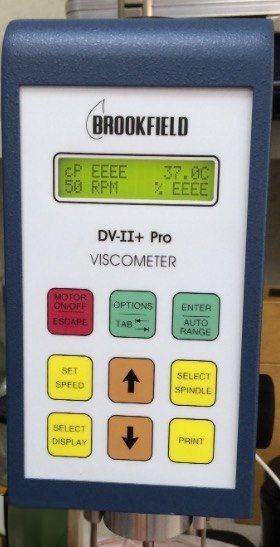
Figure 1 - The Brookfield DV-II+PRO viscometer
The selected viscometer has some advantages that make the research clear:
- the research can be conducted not only at different rotational speeds, but also in their various directions;
- there is sufficiently high accuracy of measuring viscosity +- 1% of the upper limit in the measuring range;
- it is equipped with 2 programs giving the right to choose;
- it can determine the viscosity over a wide range (from 0.1 Pa.c from up to 10.5 Pa.c) and at a low shear rate (up to 102c-1);
- it has an indication of going beyond the measuring range.
What is more, if the countdown is above 100% (overload) or below 10% (underload) the corresponding image appears on the display as an action to change the spindle (Fig.2,3) and to continue the research.
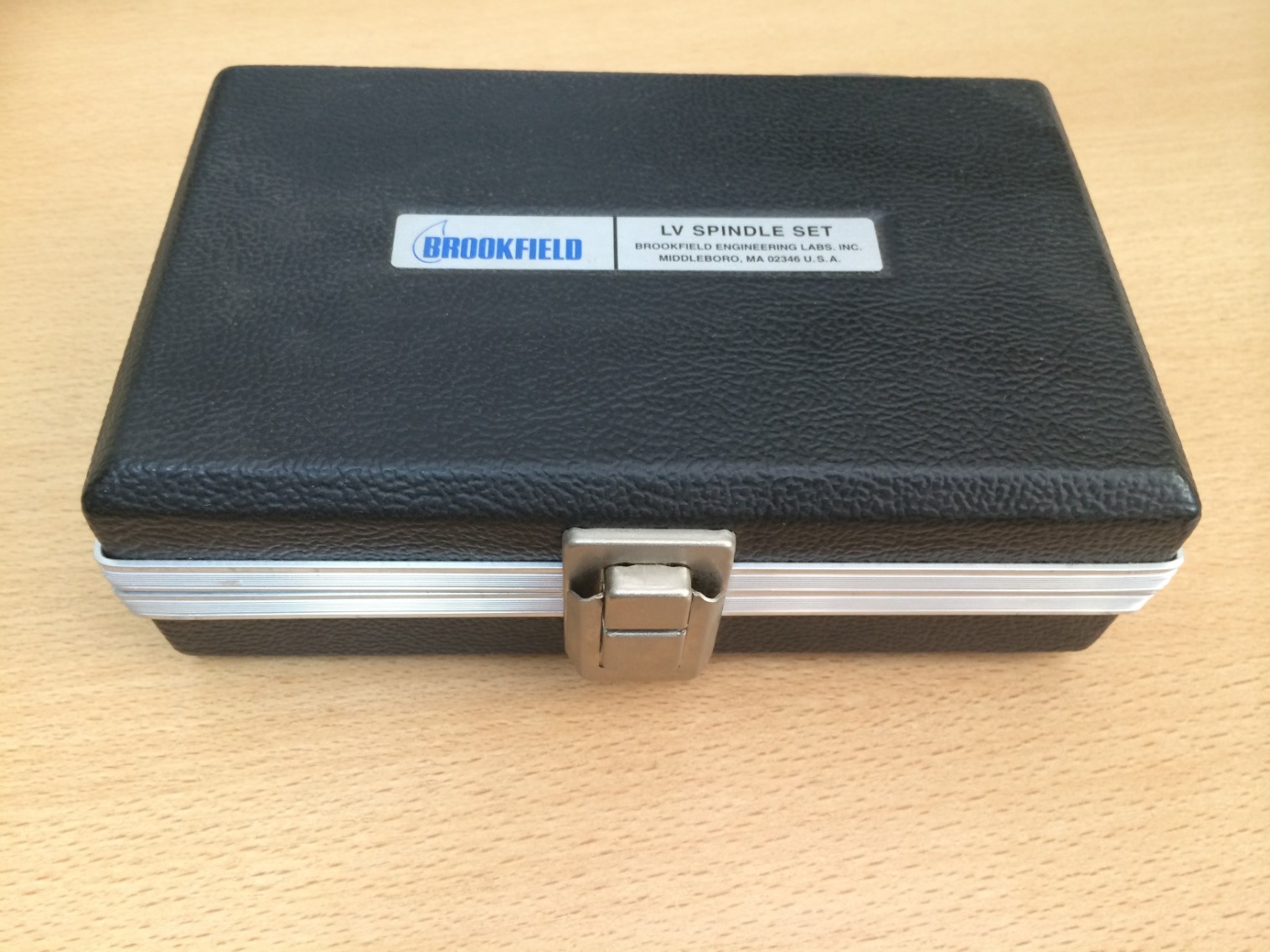
Figure 2 - The spindle box
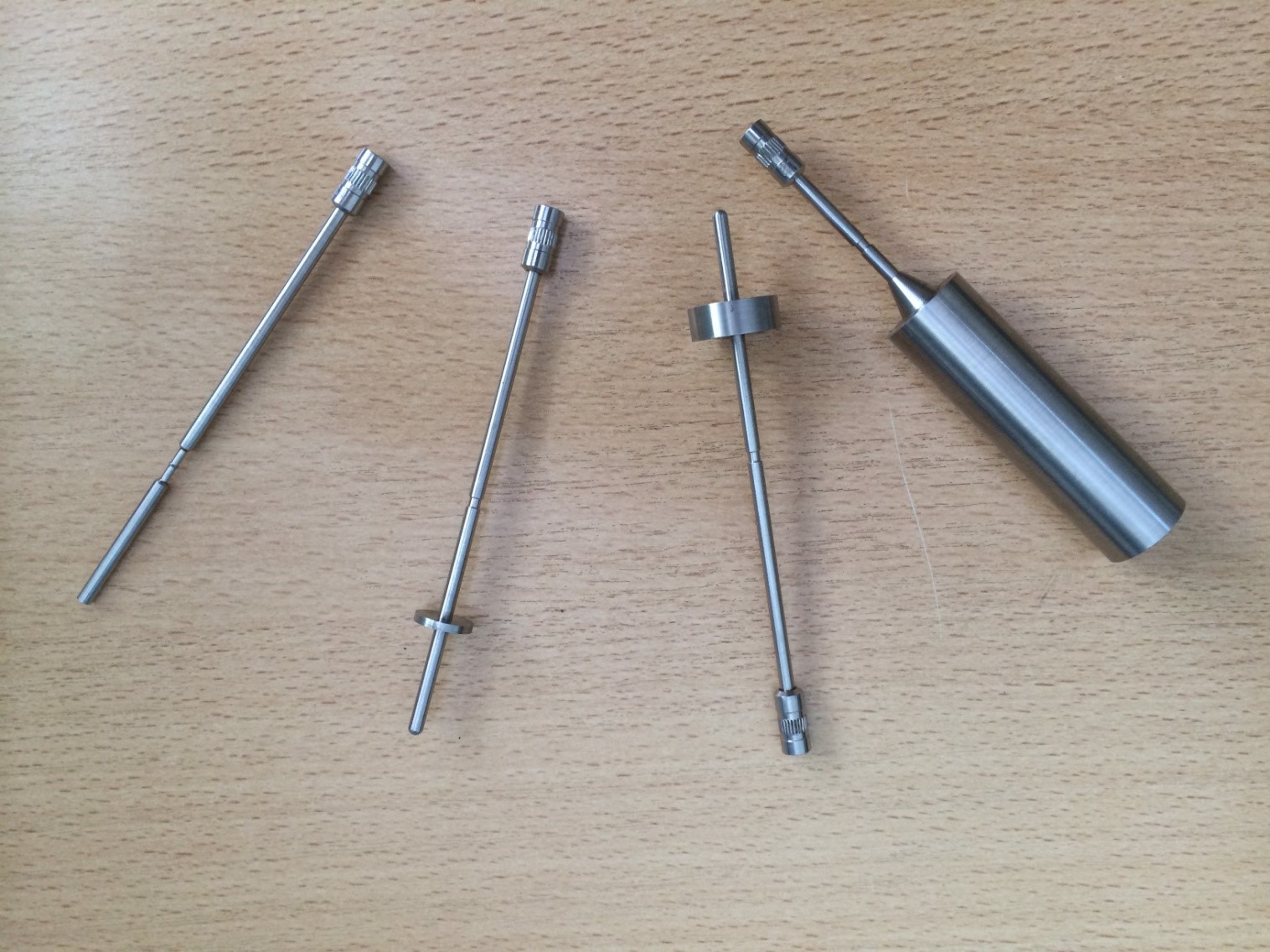
Figure 3 - The selection of spindle
It is known that the viscosity of a substance changes under the influence of temperatures , . Therefore, our testing was done by a set temperature of 37°C. During the experiment, individual data for each patient was being obtained and the average statistical indicator of the entire group was being calculated.
At the second stage, the viscosity parameters of fixing agents used for fixing prostheses were determined. These types were roughly defined as Type I (factory-made powder) and Type II (cream). Both types were tested in a uniform physical condition, which was achieved by saturating with oral fluid (saliva). Their exact compositions are revealed as natural sodium alginate (Type I) and Calcium/sodium PVM/MA copolymer, petrolatum, cellulose gum, paraffinum liquidum (Type II).
Each type was examined three times in a viscometer by the appropriate spindle speed, size and shape; at the size and shape of the used capacity; and at a given distance between the capacity wall and the spindle surface. On this basis, the obtained viscosity values were compared with the viscosity values of the control group. First of all, the results of the control group were obtained. Results are shown in Table 1.
Table 1 - Viscosity values of the oral fluid in the control group
Shear rate, 1/s | to, Со | Viscosity, MPa |
20 | 37 | 190,1 |
30 | 37 | 134,8 |
50 | 37 | 94,9 |
Secondly, Type I and Type II agents were being investigated. Results are shown in Tables 2,3.
Table 2 - Viscosity values of the oral fluid obtained from Type I
Shear rate, 1/s | to, Со | Viscosity, MPa |
20 | 37 | 5244 |
30 | 37 | 3087 |
50 | 37 | 2765 |
Table 3 - Viscosity values of the oral fluid obtained from Type II
Shear rate, 1/s | to, Со | Viscosity, MPa |
20 | 37 | 6837 |
30 | 37 | 4721 |
50 | 37 | 4197 |
As expected, the viscosity of Type I and Type II agents many times exceed the viscosity index of the control group. It may be generally pointed that the best values were obtained for the Type II. The cream as a fixing agent exceed the obtained values of powder by 29%.
At the next stage, the second group of 34 patients aged 45–69 years old using the complete removable prostheses was formed. The anatomical conditions were as close as possible for all studied patients (type 2 according to Keller, type 2 according to Supple) , .
The patients in this group were subdivided into 2 subgroups of 17 people. One group was asked to use Type I agent first, and then change it to Type II. The other group, on the contrary, was asked to use the Type II agent first. All the patients had to use provided fixing agents for 30 days. Within 30 days, the patients had to assess their condition according to several criteria, resulted in 4 levels of adaptability. The adaption process to different fixing agents (Type I and Type II) was being studied in various dates of adaptation. Studies were repeated at certain time intervals (at 1st, 10th 20th, 30d day). All the data collected have been undergoing a comparative assessment. Results are shown in Tables 4,5.
Table 4 - Dynamics of the adaptation process to fixing agents. Type I
The observation stage | Clinical patient group | The number of patients | ||||||
The coming full adaptation | The optimal course of the adaptation process | Distinct phenomina of dis-adaptation | Unsatisfactory adaptation | |||||
n | % | n | % | n | % | |||
Day1 | Group I | 0 | 0 | 0 | 0 | 17 | 100 | 0 |
Group II | 0 | 0 | 0 | 0 | 17 | 100 | 0 | |
Day 10 | Group I | 0 | 0 | 3 | 17 | 14 | 83 | 0 |
Group II | 0 | 0 | 2 | 13 | 15 | 87 | 0 | |
Day 20 | Group I | 3 | 17 | 5 | 29 | 9 | 54 | 0 |
Group II | 2 | 13 | 5 | 29 | 10 | 58 | 0 | |
Day 30 | Group I | 6 | 34 | 10 | 58 | 1 | 8 | 0 |
Group II | 11 | 66 | 6 | 34 | 0 | 0 | 0 | |
Table 5 - Dynamics of the adaptation process to fixing agents. Type II
The observation stage | Clinical patient group | The number of patients | ||||||
The coming full adaptation | The optimal course of the adaptation process | Distinct phenomina of dis-adaptation | Unsatisfactory adaptation | |||||
n | % | n | % | n | % | |||
Day I | Group I | 0 | 0 | 0 | 0 | 17 | 100 | 0 |
Group II | 0 | 0 | 0 | 0 | 17 | 100 | 0 | |
Day 10 | Group I | 0 | 0 | 3 | 17 | 14 | 83 | 0 |
Group II | 0 | 0 | 2 | 13 | 15 | 87 | 0 | |
Day 20 | Group I | 2 | 13 | 10 | 58 | 5 | 29 | 0 |
Group II | 5 | 29 | 10 | 58 | 2 | 3 | 0 | |
Day 30 | Group I | 14 | 83 | 3 | 17 | 0 | 0 | 0 |
Group II | 12 | 71 | 5 | 29 | 0 | 0 | 0 | |
Note: the results of clinical trials were compared with laboratory data and it was found that they confirm each other; type II showed the best result
The results of clinical trials were compared with laboratory data, and it was found that they confirm each other. Type II showed the best result.
After the experiment, the questionnaire applying the method of expert assessments and means of dispensary analysis was being used. Previous research and survey data from orthopedic dental practitioners has demonstrated main groups of patients’ complaints , , . At the same time, the objective characteristics of the prosthetic bed inherent in adjustment period to removable plate prostheses were being collected. All this allows us to make the list of allegations assembled in 5 main groups:
1) masticatory discomfort;
2) tactile discomfort;
3) signs of injury in mucous membrane of prosthetic bed;
4) type of salivation;
5) communication errors.
In the current study, it is assumed that it is necessary to reflect TMJ (temporomandibular joint) as well masticatory muscles reaction. Taken this fact into account, the list of allegations given below was changed and “The protocol of dynamic patient management during the adaptation period to complete removable prostheses” was elaborated. It shows the reaction of TMJ and masticatory muscles to prostheses in different adaptation periods with different fixation agents. Results are shown in Table 6.
Table 6 - The protocol of dynamic patient management to complete removable prostheses during the adaptation period
List of allegations | List of complaints | Evaluation | ||
masticatory discomfort | 1. discomfort and pain unpleasantness in TMJ | 0 | 1 | 2 |
2. complains about chewing and biting food | 0 | 1 | 2 | |
3. discomfort in masticatory muscles | 0 | 1 | 2 | |
tactile discomfort | 4. discomfort in the mouth | 0 | 1 | 2 |
5. complaints about too much extra in the mouth | 0 | 1 | 2 | |
6. patient always tries to find design flows with its tongue | 0 | 1 | 2 | |
signs of injury in mucous membrane of prosthetic bed | 7. hyperemia of mucous membrane in the prosthetic bed | 0 | 1 | 2 |
8. traumatic injuries of mucous membrane (including lips and cheeks) | 0 | 1 | 2 | |
9. inflammation sites of mucous membrane (including lips and cheeks) | 0 | 1 | 2 | |
type of salivation | 10. impairment of taste properties of saliva | 0 | 1 | 2 |
11. dryness of mucous membrane in the prosthetic bed | 0 | 1 | 2 | |
12. hypersalivation | 0 | 1 | 2 | |
communicative discomfort | 13. esthetic discomfort (the patient isn’t content with color and form of restored teeth) | 0 | 1 | 2 |
14. communication errors | 0 | 1 | 2 | |
15. psychological discomfort (the patient thinks others to be noticed his prostheses) | 0 | 1 | 2 | |
Sum of evaluations S |
| |||
Rate of dis-adaptability = 100 х S/n, n = 15 |
| |||
4. Conclusion
It can be concluded that the course of the adaptability process varies in different groups of patients. This fact indicates the importance of using means for fixing prostheses in order to improve their stabilization and at the same time the emotional state of the patient. It was founded that the faster adaptation was facilitated by an agent in the form of a cream substance.
In summary, this paper argued that statistical analysis of the research results and preliminary analysis of functional changes in the process of adaptation by patients with various fixing agents made by a doctor increase the reliability of the evaluation of patients’ adaptation timeline, provide objective predictive data and thereby improve the availability and the quality of the patients’ life. In this way, evidence rating of the duration of adaptability term by patients with removable plate prostheses depends on fixing agent being used for these purposes.