
Preliminary results of the study of condensation properties of zinc oxide nanoparticles
Preliminary results of the study of condensation properties of zinc oxide nanoparticles
Abstract
To control cloud processes, in particular, for artificial precipitation, it is proposed to use zinc oxide nanoparticles with condensation properties as a reagent. The article presents a method for the synthesis and investigation of zinc oxide ZnO nanoparticles. The results of preliminary studies of their condensation properties are discussed.
Nanoparticles were synthesized in a vacuum chamber at atmospheric pressure, graphite was used as a catalyst. Then they were brought into a large cloud chamber, where an artificial cloud environment was previously created.
As a result of experiments, it was found that when a reagent based on zinc oxide nanoparticles is sublimed directly in a cloudy environment, its condensation properties manifest themselves. They are partly due to the size and number of nanoparticles formed, which are condensation nuclei.
A reagent based on zinc oxide nanoparticles can be recommended as an additive to composite materials. Complex formulations expand the temperature range for efficient use compared to traditional reagents, which ultimately increases the efficiency of weather modification work.
1. Introduction
Weather modification in order to regulate precipitation is one of the urgent tasks of meteorology. To solve this problem, it is necessary to develop effective reagents that affect microphysical processes in clouds
, . Chemicals with condensation properties are used as reagents to control cloud processes , . At the same time, the issues related to the formation of the reagent particles themselves have not been sufficiently studied. Most of the reagent particles are nanoparticles. In the nanoscale domain, the importance of surface phenomena increases significantly and the interaction of particles with each other increases. This significantly affects the phase transitions.Therefore, one of the ways to increase the activity of reagents is to synthesize reagents in the form of nanoparticles
. In this case, it is possible to achieve an increase in the number of active nuclei by reducing the proportion of particles whose size is less than critical. Also, the efficiency of reagents is increased by increasing the number of particles with a large surface area.Modern scientific research in the field of weather modification is characterized by the study of hygroscopic reagents, which is an urgent task. The beginning of the research on condensation properties was given in
. Studies of the condensation properties of reagents were conducted by Russian scientists , , . It should also be noted the work of foreign scientists who conducted work on the study of condensation properties of reagents for artificial precipitation. Nanoparticles of sodium chloride and particles of sodium chloride with an admixture of titanium oxide were studied , .2. Research methods and principles
An instrument base for conducting experiments
The large cloud chamber (Fig. 1, a) is a rectangular container with thermally insulated walls. The chamber is cooled using three refrigerating units. The temperature control system in the chamber maintains temperature conditions from +5 to +30 °C. The chamber is covered with a thermal insulation film to reduce the temperature gradient and has four fans for mixing the air. The camera has a sensor for monitoring relative humidity. An artificial mist generator is connected to the chamber through a pipe, a fan is installed in the chamber to create a stream of moist air, and a device for sublimating the reagent is located.
The concentration of aerosol particles in the chamber was measured by a Lasair III meter (Fig. 1, b). During the experiment, the meter was installed in the camera, and the data was printed from a printer built into the meter. The aerosol particle counter takes a measurement from the camera every 20 seconds.
An AmScope microscope with a video camera was used to photograph the droplet area (Fig. 1, c).
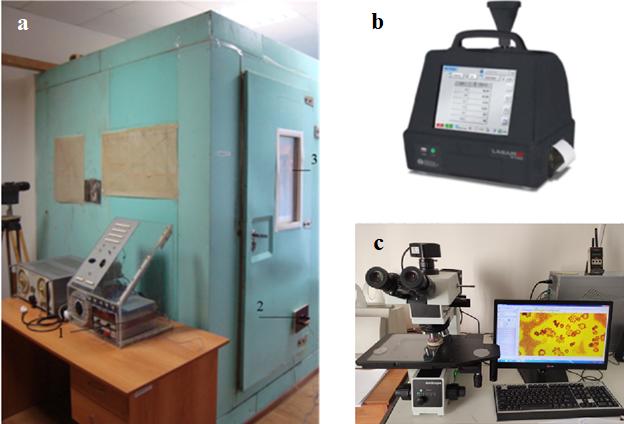
Figure 1 - Equipment for performing experiments
Note: a) Cloud chamber: 1 – control panel; 2 – window for reagent application; 3 – viewing window; b) The Lasair III aerosol particle counter; c) Data analysis system: AmScope microscope; video camera; computer
3. Main results
The analysis of the substrates showed that zinc oxide nanoparticles were formed under the action of an arc discharge (Fig. 2). They are shaped like tubes, plates, and balls. The tubes have a diameter of 7–10 microns, and the plate has a thickness of several tens of microns. There are many "fluffy" balls on micron tubes.
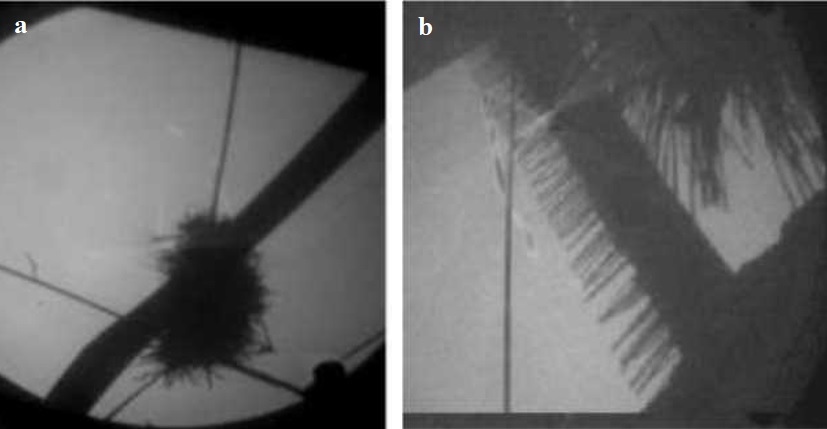
Figure 2 - Nanotube ball (a) and zinc oxide plate (b)
Let's estimate how many times the effectiveness of a zinc oxide reagent increases when dispersed in the form of nanotubes. Let's assume that the reagent particles in the first case have a spherical shape with a diameter of 5×10⁻⁶ cm, in the second case they have the shape of nanotubes with an outer diameter of 5×10⁻⁷ cm and an inner diameter of 3×10⁻⁷ cm. The mass of one spherical particle M =Vp, where V=3,8×10⁻¹⁶ cm3 is the volume of the spherical particle; p=5,6 g/cm3 is the density of the reagent. The number of particles per gram is N=2,6×10¹⁵.
Let's perform a similar calculation for nanotubes. We will find the length of the nanotube from the equality of the surface areas of the spherical particle and the nanotube. This approach is justified by the fact that the critical particle size of the reagent is determined by the surface area of the particle.
By performing elementary calculations, we obtain that the length of the nanotube is L = 2,5×10⁻⁵ cm. The mass of one nanotube particle is Mt=1×10-17, and the number of particles per gram is N=5,5×10¹⁶. A comparison of the calculation results shows that the specific yield of the reagent in the form of nanotubes is on average an order of magnitude higher than that of spherical particles.
In fact, the reagent particles are not spherical, so the difference will be smaller. In any case, their specific yield from the reagent when dispersed in the form of nanotubes will be greater.
To study the condensation properties, substrates with zinc oxide nanoparticles were kept in a humid environment.
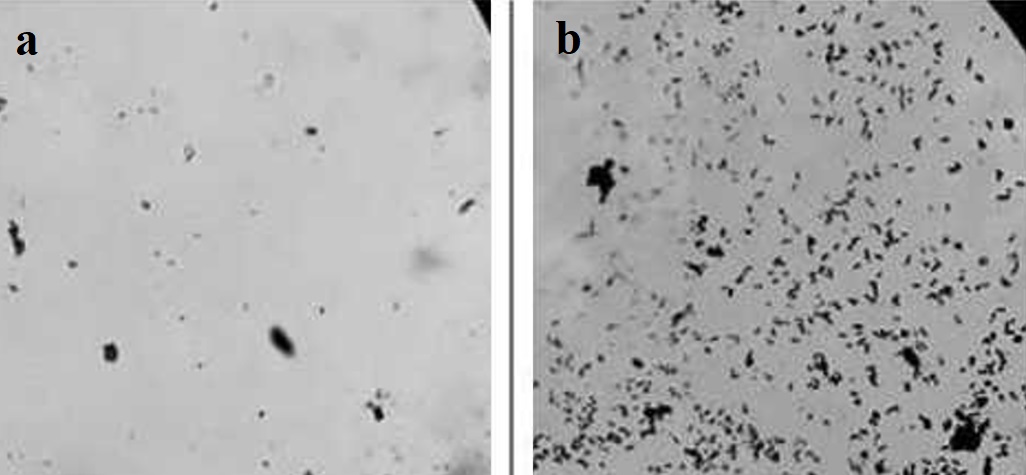
Figure 3 - Glass substrate with nanoparticles
Note: a – after deposition; b – after exposure at a humidity of 100 %
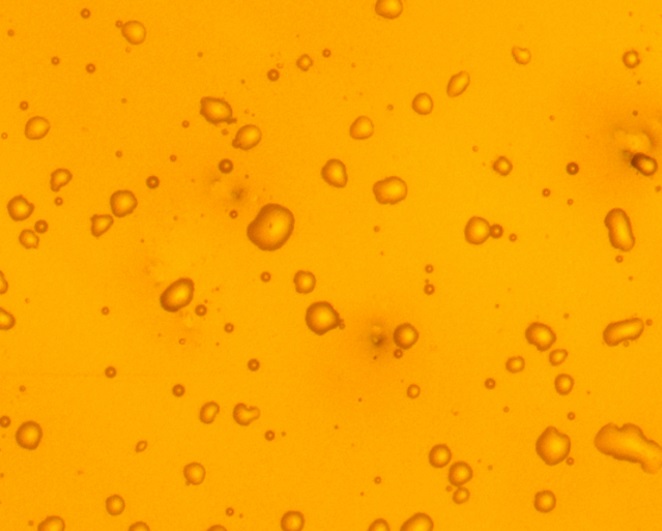
Figure 4 - Glass substrate with nanoparticles after exposure in a humid environment
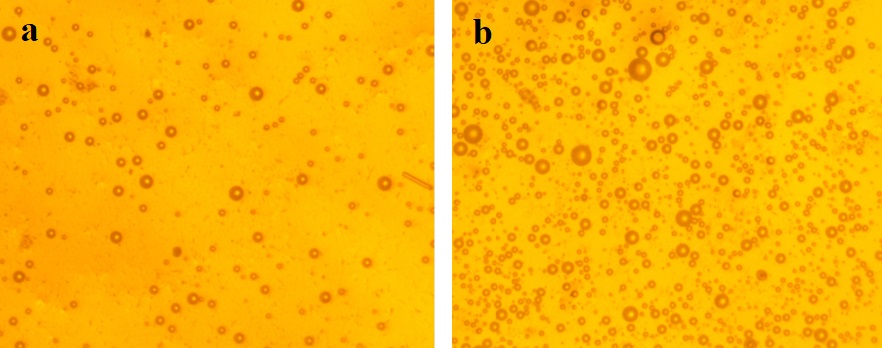
Figure 5 - Glass substrate with droplets
Note: a – background values; b – after reagent sublimation
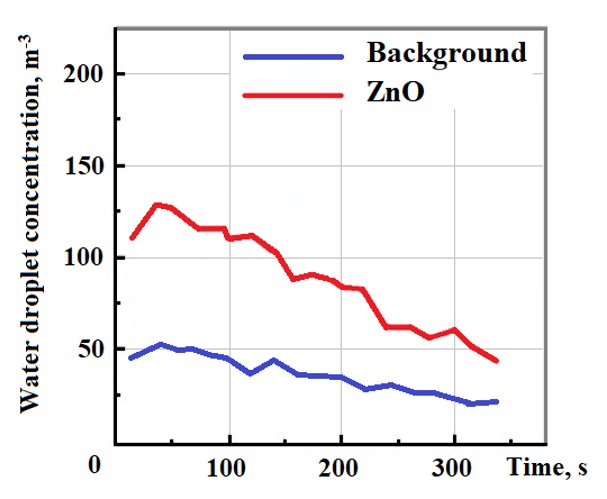
Figure 6 - The concentration spectrum of water droplets of different sizes
It has been found that the amount of condensed water is much greater than the number of nanotubes. However, in order to effectively use the condensation properties of nanotubes to affect cloud processes, they must be obtained in an environment that should be affected, since moisture condenses on nanotubes during storage.
4. Conclusion
A method for synthesizing nanotubes for weather modification has been developed. Preliminary studies show that under the action of an arc discharge, zinc oxide nanoparticles are formed, which have the shape of tubes, plates and balls.
The tubes have a diameter of 7–10 microns, and the plates are several tens of microns thick. The specific yield of the reagent in the form of nanotubes is on average an order of magnitude higher than that of spherical particles.
After exposure to a humid environment, the nanotubes increase due to condensed moisture. Under the action of reagent particles, the concentration of droplets increases rapidly and their number is on average 2 times higher than the background values of the droplet spectrum.
The use of nanotechnology in meteorology can give an impetus to understanding the initial mechanisms of water phase transitions in the real atmosphere and contribute to the development of more effective means of weather modification.
This is an important step to test the effect of rain-causing reagents before conducting field work on cloud seeding from the air. Preliminary results have shown that a reagent based on zinc oxide nanoparticles can be used for cloud seeding.