
Experimental Forms in the English Literature of the 21st Century: Fragmentation and Hypertext (on the Materials of Novels by Zadie Smith "White Teeth" and Mark Z. Danielewski "House of Leaves")
Experimental Forms in the English Literature of the 21st Century: Fragmentation and Hypertext (on the Materials of Novels by Zadie Smith "White Teeth" and Mark Z. Danielewski "House of Leaves")
Abstract
XXI century English literature reflects major social and cultural changes influenced by globalization and digital technology development. One of the defining features of literary texts of the period is the use of experimental narrative techniques, such as fragmentation and hypertext, that challenge traditional narrative forms and promote more complex and interactive experiences of reading. The relevance of the study is based on the changes in digital culture and globalization, making the study of experimental narrative techniques particularly important for contemporary English literature. This article examines these techniques in Zadie Smith’s "White Teeth" and Mark Z. Danielewski’s "House of Leaves". Smith uses fragmentation to present diverse plot narratives, intertwining multiple perspectives and timelines. Danielewski explores hypertext-like structures, engaging readers in an immersive storytelling process. Through these examples, the study highlights how modern literature integrates experimental forms to reflect contemporary literary diversity and evolving reading practices.
1. Introduction
English literature in the XXI century shows considerable variation in its makeup of literary pieces. This is reflected in the progress with respect to digital technology, globalization, and the increased use of the Internet, with writers increasingly employing new narrative methods in their works. Among those methods are fragmentation and hypertextuality, tools for creating new meaning and interacting with the reader in new ways. They are reflective of the diversity in postmodern culture and how perception of reality changes in a world that is increasingly technological.
The main concern of the current research lies in the examination of narrative approaches in recent English literature. This research is designed to identify and examine the use of new formal and structural elements in literature that disrupt traditional narrative methods and create new models for reader-text interaction.
The importance of the study is underscored by the need to understand the changes in literary discourse due to cultural globalization and digitalization. The increased use of multimedia elements and non-linear structures in literary works requires the creation of new models of analysis that can cope with the complexity of new texts.
The current research presents significant scholarly contributions in that it offers in-depth analysis of certain narrative and compositional methods — fragmentation and hypertextuality, that are used in the works of novelists of the XXI century, with focus on the case of Zadie Smith's "White Teeth" and Mark Z. Danielewski's "House of Leaves." The overall thesis identifies how those methods are reshaping literary form and function in the environment of modern literature. The academic value of this research lies in its deepening of narrative theory and literary theory through a deeper understanding of how textual structure, narrative process, and the reading habits of individuals in the cultural contexts of our modern world interact. The potential applications of this research are pragmatic and include its potential inclusion within the scholarly study of modern English literature. The research methods specifically designed for the analysis of texts in the postmodern and the digital culture and combine literary scholarship and language.
The piece is a detailed discussion of formal innovations that characterize English literature in the XXI century, highlighting how experimental narrative modes redefine the literary experience in response to modern shifts.
2. Research methods and principles
The current study shows a synthesis of common scientific techniques together with specialized techniques that are applicable in examining literary and cultural phenomena. Among the theoretical techniques applied are analysis, synthesis, induction, deduction, and comparison. These techniques served as the basis for the identification, classification, and explanation of principal characteristics of experimental narrative forms in modern English discourse.
Of the expert methodological strategies, the following were used:
– a structural-functional approach, which enabled the examination of the formal structure of texts alongside the functional sense of non-linear and fragmented narrative forms in representing broader socio-cultural processes;
– a methodological strategy that made it possible to identify narrative devices and relate them to innovations in literary discourse in the context of the digital era;
Discourse analysis is an applied research instrument enabling close analysis of texts from a socio-pragmatic approach, with special attention to the interplay between narrative structure, contextual factors, interpretative processes, and readership.
The selected methods and theoretical perspectives yielded the level of interpretation of how structural innovations in the form of fragmentation, hypertextuality, and interactivity, work simultaneously as artistic skill and as indicators of the epistemological and cultural turns typical of XXI century English literature.
3. Main results
3.1. Textual Fragmentation in Contemporary English-Language Discourse
The concept of textual fragmentation, which has gained significant prominence in recent decades in the study of English-language literature, represents both a specific narrative technique and a deeply rooted methodological approach that reflects the characteristics of contemporary reality. In the digital age, marked by accelerated information processing and consumption, traditional linear narrative forms are increasingly being replaced by compositions comprising autonomous, and at times disjointed, elements: "One of the prominent scholars of postmodernism, Douwe Fokkema, argues that many postmodern texts are nothing more than a collection of unrelated fragments" . This disintegration of conventional narrative structures can be seen as a response to shifts in modern patterns of thinking, wherein information is no longer perceived as a cohesive whole, but rather as a series of discrete episodes requiring individual interpretation.
While textual fragmentation can trace its origin to modernist literature, it develops most vibrantly in the framework of postmodern literary discourse. Postmodernism, as inherently oppositional to traditional structures and conventions, provides options for various experimental strategies, including narrative disintegration: "Fragmentation became a means to represent the disintegration of traditional values and the fragmented nature of modern life" . The shift from experimental approaches characteristic of modernism to postmodern practice in deconstruction of conventional narrative schemas is motivated by writers' attempts to capture the disorderly character of contemporary informational surroundings. This reconsideration of narrative composition makes it possible for viewers to investigate how the interaction among different textual components can be employed to the narrative with further meanings and enable a complex interpretation of represented reality: "...they mimic the fractured experience of modern life…" .
Most significantly, fragmentation makes possible the enrichment of the narrative by the incorporation of more planes of meaning. Every fragment may be read as a separate story or episode, with its own particular semantic orientation; when each of these individual units is linked, they all collaborate to create a dense structure of narrative. This approach invites the reader to be an active rather than a passive participant in the interpretive process, allowing them to "construct" the total meaning of the text for themselves and to be a part of the dynamic process of literary meaning creation.
Secondly, fragmented narrative structures are a method to represent the instability of the contemporary information climate. In a world characterized by an abundance of media and ubiquitous technological upheaval, information gets dispersed, remapped, and transformed at historically unprecedented speeds. The fragmentation is a representative illustration of such unpredictability, representing the ceaseless processes of reformulation and restructuring of semantic arrangements that are typically characteristic of the digital environment.
Third, fragmentation requires a reflective consideration of literary form. The change in the plot for completeness in narrative compels the reader to reconsider the organization and content of the work. As compensation for this loss of completeness, it encourages the build-up of critical knowledge and interpretive awareness. By disrupting traditional narrative expectations, the fragmented form challenges the listener or reader to consider how the arrangement of elements influences the comprehension and interpretation of the ideas expressed in the literary work.
Summing up, the use of textual fragmentation among modern authors is not only a matter of style but also a methodological stance that aligns with the aesthetic and epistemological imperatives that are intrinsic to the literary discourse of the XXI century. It encourages critical consideration, eliciting thought on the literary work's form and content, and its placement in a wider cultural and historical framework. Through the division of the text into individual components, writers are given the chance to serve several key literary and communicative purposes.
3.2. Zadie Smith and Textual Fragmentation in "White Teeth"
Zadie Smith's "White Teeth" is the ideal illustration of the effective use of fragmentation as a tool to convey a multitude of interlocked perspectives and histories. The novel, which involves numerous intersecting storylines, employs a fragmentary form as a means to capture the diversity of backgrounds that influence the characters' existence: "...the fragmented structure of the novel blends the present with the past…" . Possibly the most recognizable aspect of the novel is its emphasis on such themes as multiculturalism, identity, and cultural change against the background of a postcolonial world.
Smith uses textual fragmentation as a way to create a multidimensional narrative that helps to capture the inherent uncertainty of social reality. The novel's structure allows for the mixing of various historical and cultural dimensions, blending real events with fictional stories. The narrative spans several generations of families whose lives are linked to the United Kingdom, and through their lives, the evolution of British society is reflected within a backdrop of social and cultural turbulence.
Each chapter of “White Teeth” tells the story of a particular character whose life path may seem separate but is in fact deeply interwoven with others. A key element of fragmentation in the text is the skillful interlacing of past and present. Rather than narrating the characters’ stories in a single chronological sequence, Smith presents a series of temporal periods of time, where each chapter, situated in a particular year, becomes an independent fragment: “Archie 1974, 1945” , “Samad 1984, 1857” , “Irie 1990, 1907” . The structure of the novel shifts depending on which character occupies the narrative center at a given moment. This enables Smith to work with multiple temporal layers and viewpoints, rendering the narrative multivalent and multilayered. Such a mode of narration requires active engagement from the reader, who must reconstruct the fragmented pieces of the plot to arrive at a comprehensive understanding.
A representative example of fragmentation is found in the narrative path of Alfred Archibald Jones, a central character whose interaction with cultural identity in the context of the postcolonial is presented in the form of a disjointed set of recollections and feelings. The portrayal of Archibald exists on several levels, each explaining the contradictions that define his life and the complexities involved in his search for social belonging. Thus, fragmentation is deployed with the function of illuminating the complexity of his psychological state, making his viewpoint convoluted. For instance, Archie's recollections are realized in the form of disjointed flashbacks. He is in the present moment in one instance, but then it shifts to specific incidents from his past. This event is characterized by its thematic density — it is representative of the persistence of memory and guilt in the midst of the destruction of a unitary understanding of one's past: “Once the car started to fill with gas, he had experienced the obligatory flashback of his life to date. It turned out to be a short, unedifying view in experience… dull childhood, a bad marriage, a dead-end job…” . Instead of offering a coherent narrative, Smith makes the viewer reconstruct these shattered recollections, and thus mirrors the subject's own shattered sense of identity.
Also, Zadie Smith frequently employs explicit temporal markers of narrative — succinct yet effective declarations that signal important moments and place the reader in a definite temporal position: “This was 1974… Hortense was preparing for the End of the World, which, in the house diary, marked carefully in blue biro: 1 January 1975…” ; “1 October 1974. A detention…” ; “8.30 a.m., the first Wednesday of September, 1984…” .
Smith also employs aspects of the postmodern perspective, including genre mixing and discontinuities in linguistic tone. The novel, therefore, incorporates aspects of a family saga, satire, a philosophical fable, and a social message. The specific form of this text generates a distinctive dynamic in which separate sections stand as autonomous semantic units, and at the same time cohere into a consistent and complicated narrative structure that shows the multicultural ethos of British society at the start of the XX and XXI centuries.
3.3. Hypertext in Contemporary English-Language Discourse
Hypertext (as a narrative mode) encapsulates a non-linear, interlinked approach to storytelling that resonates profoundly with the digital era: "The digital media probed the transition from page-turners to navigators of web pages...to print to digital devices. Hypertext fictions are sui generis, revolutionizing aspects of authorship and readership in the literary arena…"
. By enabling readers to navigate through multiple interconnected textual nodes rather than following a fixed linear path, modern hypertext reshapes the literary experience, mirroring the fragmented, dynamic flow of contemporary information. The transformation is particularly evident in digital literary platforms and interactive narratives, where a reader’s journey through text becomes as significant as the narrative itself: "The main feature of a hypertext is that the recipient (the reader, the viewer, and sometimes even the listener) determines the further development of events…" ; "Viewed through this framework, language becomes a structural technology that can…shape the world" .The evolution of the theory of hypertext represents a turning point in the redefinition of the process of reading. By allowing for a shift in the reader's function from passive recipient to active navigator and interpreter, hypermedia worlds encourage a more active and personalized interaction with narratives: "Unlike traditional linear narratives…hypertext fiction gives readers the freedom to decide which sections of the text to explore next"
, "...the reader or viewer to intervene textually, physically to make text, to add visible content or tangibly shape narrative development…" . The ability to recontextualize and recollect texts challenges traditional narrative systems as well as supports the ideology of knowledge as flexible and in a perpetual state of flux. With the continuing evolution of the electronic medium, the basic premises of the theory of hypertext offer a solid groundwork for examining our interaction with and interpretation of the texts that make up our understanding of the world.The complex interaction between reader and text in hypermedia contexts has far-reaching implications. By promoting movement from passive consumption to active involvement, hypertext challenges those traditional hierarchies that have long controlled narrative forms. This presupposes that meaning becomes not fixed but constantly reconstituted through the individual interpretative processes of users, creating a considerably increased level of democracy of engagement with narratives: "...readers depend on such patterns to identify a text’s genre, anticipate its development, and integrate its parts…"
. This is all part of a wider conceptualization of knowledge as flexible and constantly subject to revision. In an increasingly networked communicative environment, the structure offered by the hypertext is entirely consonant with those associated with cognitive processes inherent in the human thought process.Interacting with multiple hyperlinks places readers in active searchers of meaning rather than passive receivers, thus fashioning clear interpretive paths. This perspective reinforces the argument that, in conditions of hypertext, meaning is created in personalized and idiosyncratic ways is a feature that shows participatory uses of narrative and challenges traditional hierarchies in the structure of information: "...readers interact with the hypertext in both linear and random ways. The process accommodates a significant amount of backtracking, re-reading, and "monitoring" or assessing the content and structure of the text…"
. Hypertext, therefore, not only challenges traditional narrative forms but also creates a more democratized mode of engagement with narrative and interpretation.Hypertext marks a shift in narrative processes, radically reshaping the form of reader interaction with text material. By remapping the act of reading from a passive and sequential process into one of active and exploratory engagement, hypertext enables readers to create meaning by creating individualized, non-linear paths. This shift challenges the traditional narrative forms and promotes a participatory interaction with material, showing the flexible nature of human cognitive processing.
3.4. Mark Z. Danielewski: Experiment with Hypertext
Mark Z. Danielewski’s novel "House of Leaves" is a literary experiment that transforms the traditional reading experience into an interactive hypertext experience. The novel plays with form, forcing the reader not just to follow a narrative but to actively explore the text as if navigating a website with multiple hyperlinks. Instead of conventional chapters, "House of Leaves" divides into three distinct narratives: a documentary about a house, the notes of a critic, and the commentary of a man who discovers these writings. These layers are interconnected through footnotes, references, and appendices, using the structure of digital hypertext.
The explorations of the book function as hypertext in several ways. First, the novel’s structure is nonlinear, with multiple layers of narration, including the main story, Johnnie Truant’s commentary, footnotes, and references to both fictional and real sources (Pic. 1). An example of using multiple choice options: “…to track the narrative events of the three explorations…” ; "Exploration #1" ; "Exploration #2" , "Exploration #3" . Also, this makes the reader to navigate the text in a non-sequential way, much like choosing the most liked option. Second, the explorations are cross-referenced throughout the book, with footnotes directing the reader to other sections, creating a web of interconnected information. This mimics the experience of navigating a hypertext document, where meaning is constructed through associative links rather than a fixed sequence.
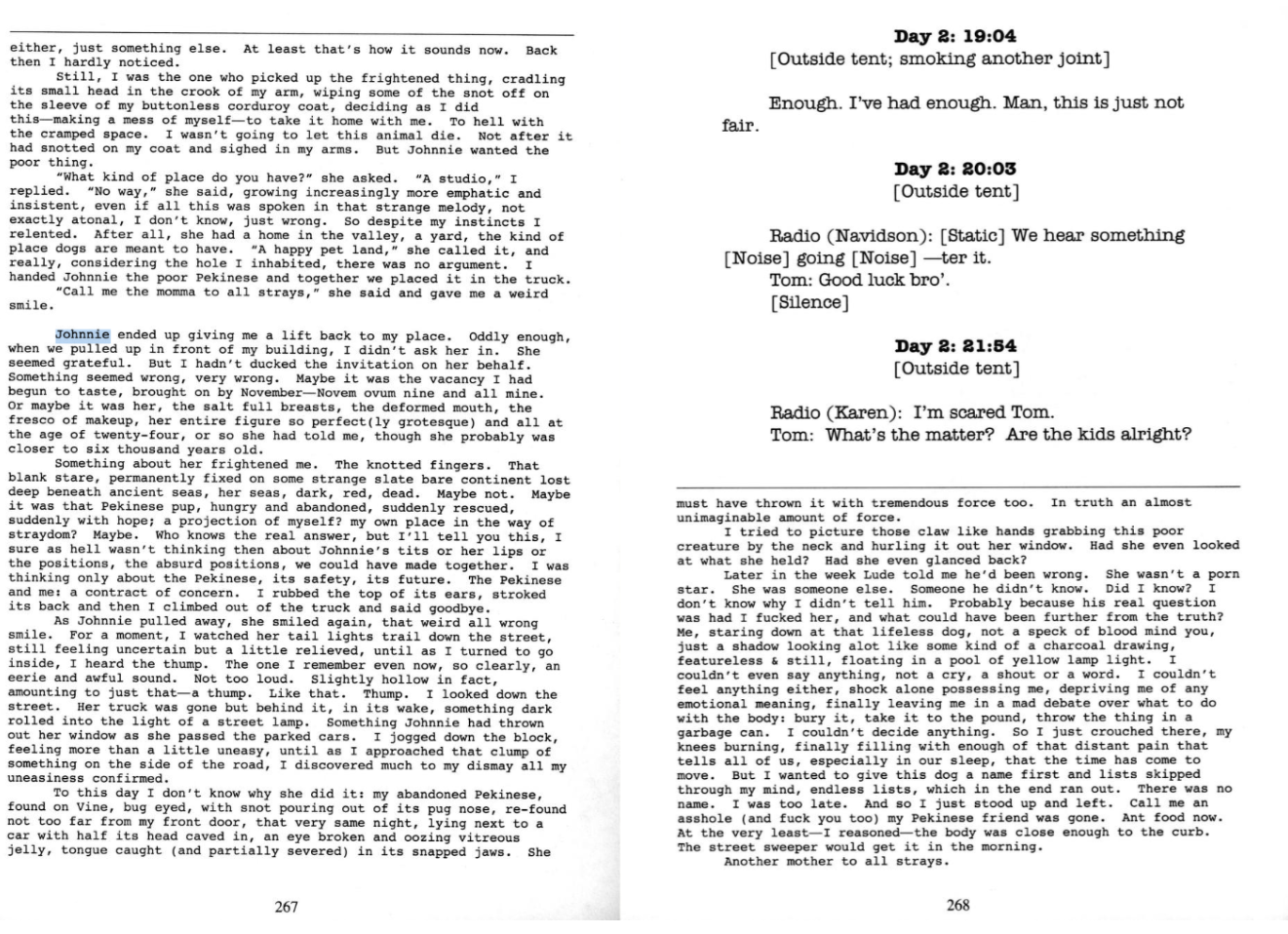
Figure 1 - The page contains several alternative scenarios
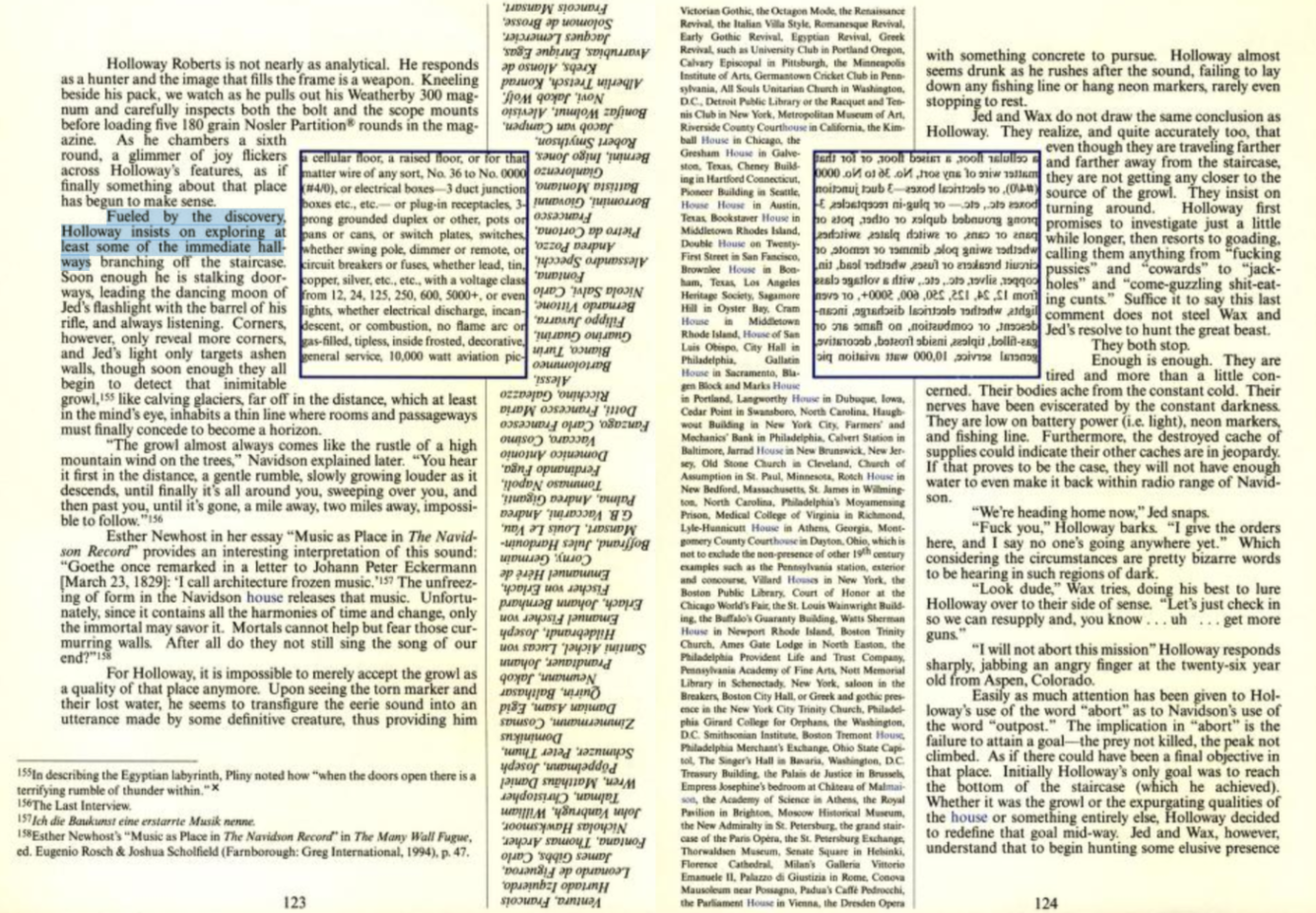
Figure 2 - The author uses different text blocks and directions of individual parts in the text
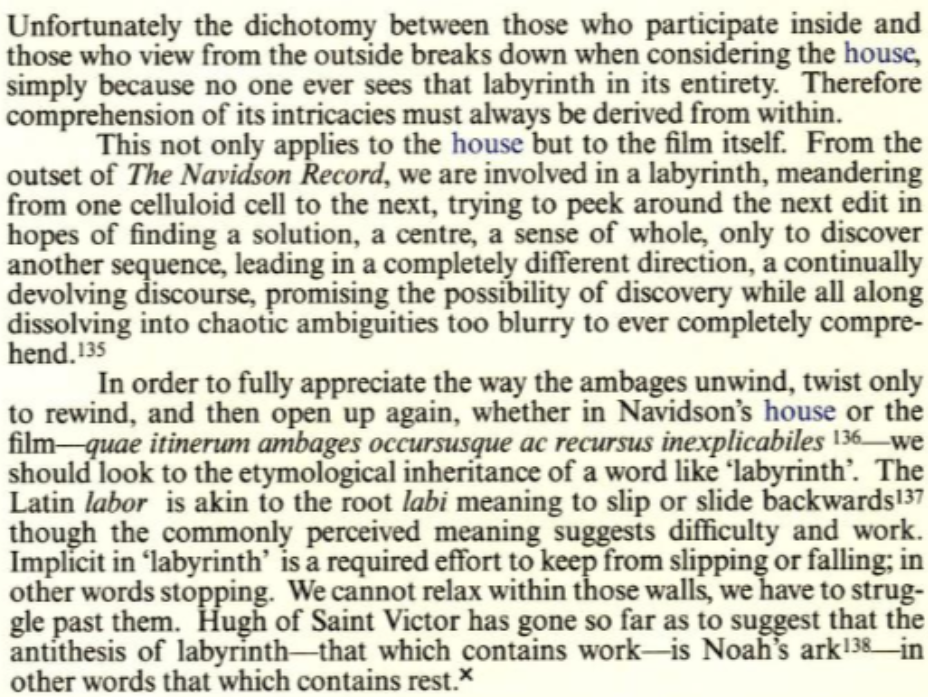
Figure 3 - The author of the word "house" in blue
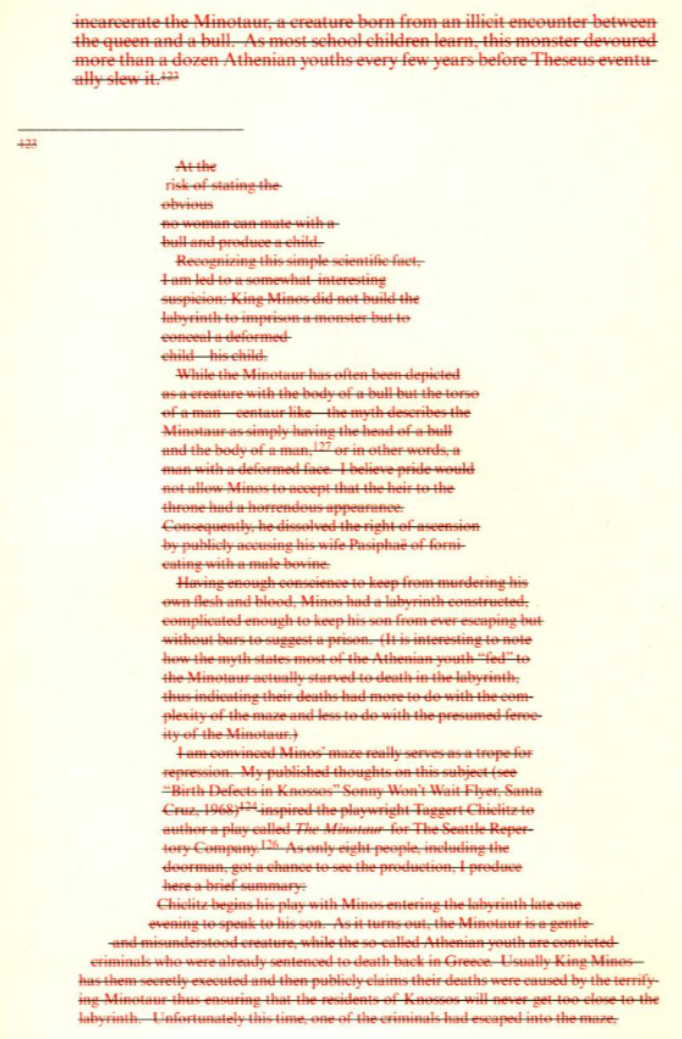
Figure 4 - The text shows different formats and strikethrough of words/sentences
4. Conclusion
The evolution of narrative forms in XXI century English literature reflects the profound transformations shown in different ways — digital technologies, globalization, and shifts in cultural perception. The increasing use of fragmentation, non-linearity, and hypertextual structures demonstrates how literary discourse adapts to the complexity of modern information landscapes, challenging traditional storytelling conventions and fostering a more interactive and interpretive approach to reading.
A study of the literary works of Zadie Smith and Mark Z. Danielewski shows that experimental forms serve both as vehicles of aesthetic innovation and tools for creating increased cognitive and emotional engagement on the part of the audience. Fragmentation heightens narratives by ensuring active participation on the part of the reader, while hypertext reconfigures literary experience in ways that respond to the networked nature of online culture. As technology creates changes in literary forms, the inclusion of new approaches with traditional narrative forms signals a significant movement toward increased diversity and complexity of narrative. This evolution both reflects the conditions of the technological age as well as emphasizes literature's enduring role in describing and addressing aspects of the human condition. Using new forms, modern English literature maximizes possibilities for interpretation and provokes readers into engagement with text in new ways.