
RESEARCH ON THE AI TRANSFORMATION AND DYNAMIC VISUAL DESIGN OF QIANG EMBROIDERY PATTERNS FROM A SEMIOTIC PERSPECTIVE
RESEARCH ON THE AI TRANSFORMATION AND DYNAMIC VISUAL DESIGN OF QIANG EMBROIDERY PATTERNS FROM A SEMIOTIC PERSPECTIVE

Abstract
The cultural significance and semiotic complexity of Qiang embroidery patterns are widely acknowledged as essential elements of intangible heritage. The emergence of Artificial Intelligence (AI) has catalyzed a significant transformation in their digital representation, facilitating the integration of traditional techniques with contemporary technological advancements and enhancing the dissemination of cultural heritage. This study employs semiotic theory to investigate the impact of AI on the evolution of Qiang embroidery patterns. It introduces a comprehensive framework for transformation encompassing material, behavioral, and spiritual aspects. Furthermore, the study offers a systematic analysis the application strategies of AI-driven tools in cultural innovation and design, thereby providing a solid theoretical basis and methodological pathways for the preservation and development of Qiang embroidery culture.
1. Introduction
As a central expression of Qiang culture, the artistic design of Qiang embroidery reflects the deep emotional connection of the Qiang people with their natural environment, religious beliefs, and daily life. These patterns carry profound semiotic significance, embedding layers of symbolic meaning . Recently, advancements in AI — propelled by big data, enhanced computational capacity, and novel algorithms — have generated remarkable breakthroughs. Concurrently, AI-generated art has emerged as a novel form that interprets and transforms the symbolic expressions intrinsic to human art through specific algorithms, effectively simulating creative processes. This phenomenon exhibits attributes of artistic creativity and constitutes a vital trend in the evolution of disciplines within the humanities and arts , . AI-powered methods now enable symbolic interpretation of Qiang embroidery patterns, supporting their seamless incorporation into contemporary visual communication. This integration not only increases their applicability in modern design practices but also intensifies their communicative power and practical utility in dynamic visual contexts .
2. Ai-based transformation of Qiang embroidery patterns
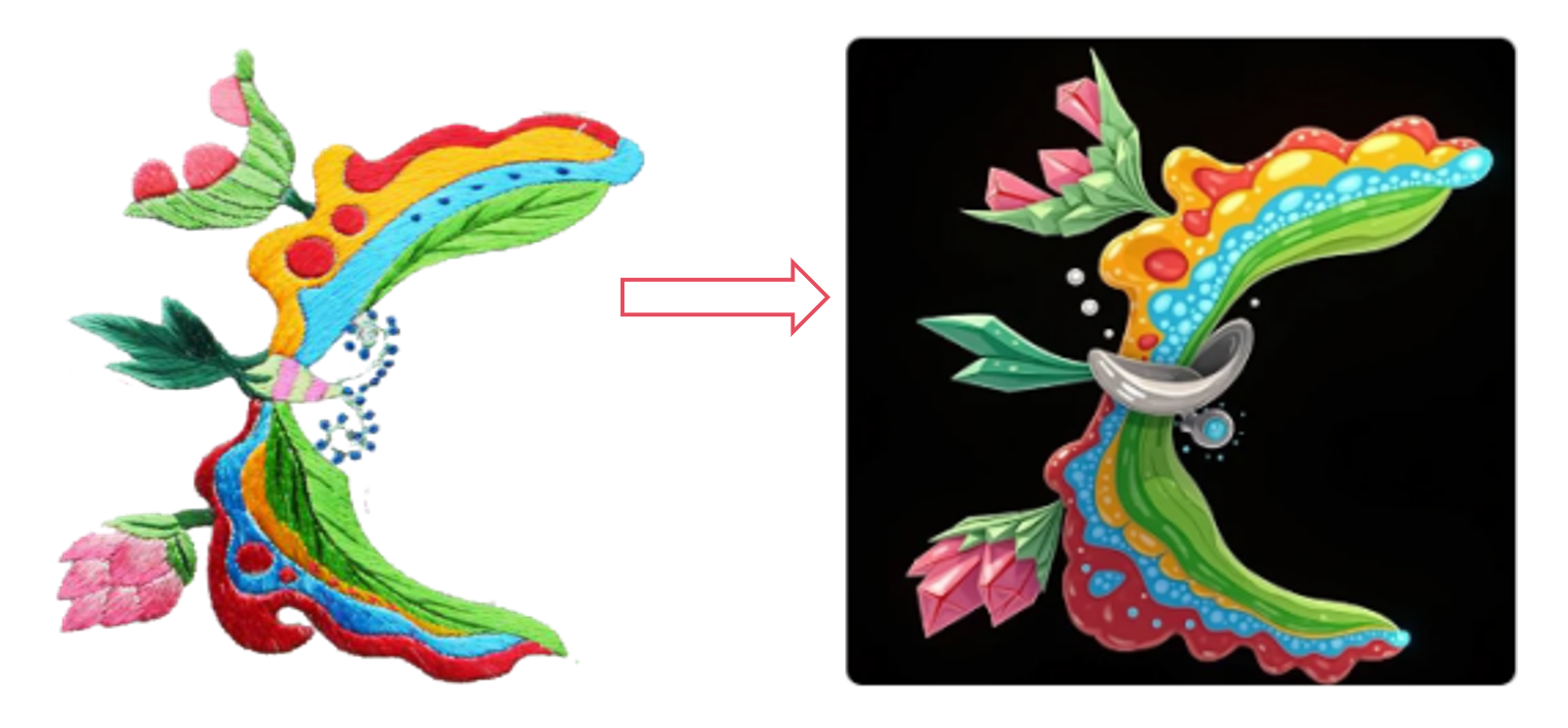
Qiang embroidery AI illustration butterfly
3. Behavioral transformation and cultural contextualization
Qiang embroidery’s transformation through behavioral methods in multicultural and socio-behavioral paradigms shows a range of approaches. Historically, these motifs are found in clothing, ritual, and domestic objects, each of which carries a certain symbolic and cultural value. Contemporary challenges involve recontextualizing these patterns for modern domain such as fashion, interior design, and digital media. An illustrative case is the transformation of the iconic “White Ram’s Horn” pattern into a woolen doll, facilitated by AI, producing multimedia presentations aligned with today’s audience preferences and emotional sensibilities (Fig. 2).
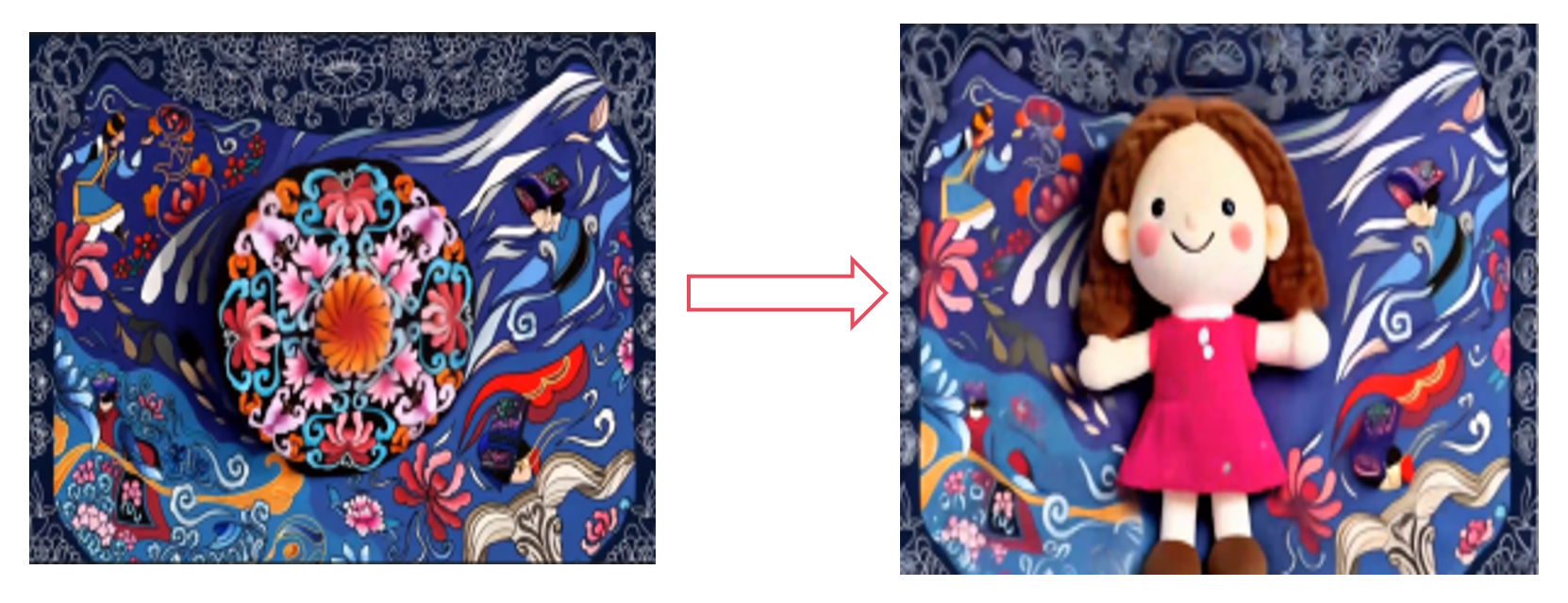
"Qiang" AI dolls

Qiang Embroidery White Arm's Horn Flower Pattern Blossom
4. Dynamic visual design process enabled by AI
The AI-enabled dynamic visual design of Qiang embroidery patterns adheres to a structured workflow comprising content collection, element identification, content interpretation, element extraction, compositional arrangement, and final application (Fig. 3).
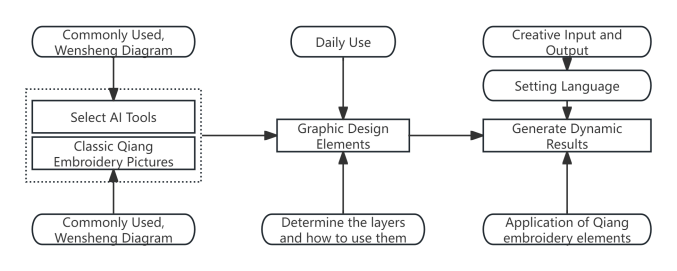
AI design process of dynamic visual map of Qiang Embroidery Pattern
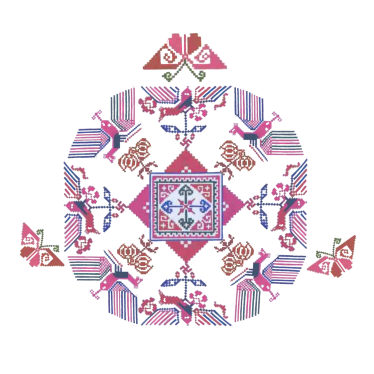
Static rendering of Qiang embroidery cross-stitch “Longevity Peach”
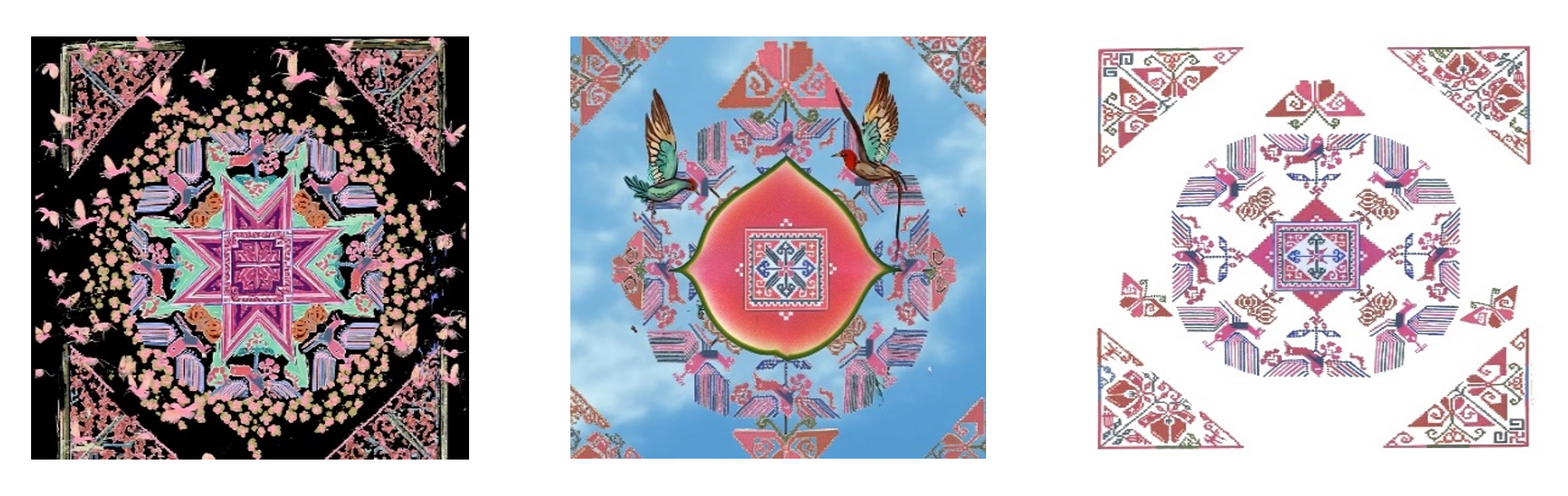
Qiang embroidery AI dynamic picture
AI dynamic display diagram
5. Conclusion
This study combines semiotic theory and AI technologies in order to achieve a dynamic visual transformation of Qiang embroidery patterns. Through a formal and symbolic interpretation-oriented analytic approach, it goes further than depicting material and reflects more in-depth cultural stories of the traditional pattern. AI-based algorithms also improve pattern recognition and allow for fidelity of adaptation that still retains spiritual and aesthetic integrity to the designs and is responsive to current audiences. Animating and interacting elements also encourage viewer engagement, increase cultural understanding, and maintain a sense of community. Notably, this framework powered by AI is scalable and sustainable to both safeguard and creatively adapt intangible cultural heritage, guaranteeing continuity of Qiang embroidery traditions amidst a changing environment.