
From sustainable to coherent development of the biosphere and humanity
From sustainable to coherent development of the biosphere and humanity
Abstract
Climate change on our planet, the depletion of natural resources, and increasing environmental tension have led to changes in environmental policy and environmental management. The adoption of the concept of sustainable development marked a new approach to solving environmental problems: fundamental international documents were adopted, and a system of goals and indicators for sustainable development was developed. In the USSR and the Russian Federation, the doctrine of the biosphere by V.I. Vernadsky was expended, alternative approaches were developed — the concept of the coherent development of nature and society and a large-scale experiment of an eco-city "Ecopolis" were developed on the basis of the science city of Pushchino and other areas. The initiators and leaders of these interdisciplinary developments were employees of several departments of biology and other faculties of Lomonosov Moscow State University and the Russian Academy of Sciences. The Department of General Ecology and Hydrobiology continues this research and conducts training in "Urban Ecology" together with the Moscow Architectural Institute (Academy).
1. Introduction
The severity of global challenges has reached a critical juncture in recent years. Issues of environmental protection and the maintenance of peace on Earth are now recognized as fundamental priorities for humankind. This situation underscores the vital necessity of achieving an optimal, coherent relationship between human society and the biosphere.
Mounting environmental pressures, a growing recognition of global biospheric risks, and the critically diminished capacity of ecosystems to assimilate anthropogenic waste have propelled environmental policy to the forefront of national agendas worldwide. Drawing upon the foundational theories of V.I. Vernadsky and academician S.S. Schwartz, the Soviet Union implemented significant measures to address these challenges. These efforts yielded tangible results, including the restoration of endangered species populations, the establishment of gene banks for biodiversity conservation, and the creation of an extensive network of protected areas, such as biosphere reserves.
The foundation for centralized environmental governance in Russia was laid in 1988 with the establishment of the USSR Committee for Environmental Protection, which later evolved into the Ministry of Environmental Protection and Natural Resources of the Russian Federation. A significant restructuring occurred in 1996, leading to a brief period of parallel operation for two state bodies handling ecological matters: the aforementioned Committee and the Ministry of Natural Resources. This dual structure was consolidated in 2000 when the Committee was dissolved and its responsibilities were fully integrated into the Ministry of Natural Resources.
Globally, the 1970s and 1980s were marked by the active development of a legal framework aimed at regulating natural resource use and establishing environmental protection principles through dedicated laws and methodological recommendations. Within this global trend, the Russian Federation enacted its foundational law "On Environmental Protection" in 1991. This period also catalyzed international cooperation, resulting in the ratification of numerous multilateral and bilateral agreements focused on the regulation of environmental management.
The 1972 report "Limits to Growth" by Professor Dennis Meadows and his team employed the WORLD3 model to outline twelve future scenarios for humanity . The modeling revealed divergent outcomes: certain scenarios projected a path of sustainable development for civilization, coupled with rising material prosperity and global population. In contrast, alternative forecasts indicated that continued population and economic expansion would likely surpass the Earth's carrying capacity by mid-21st century, precipitating a subsequent systemic decline.

Figure 1 - Humanity’s Ecological Footprint
Note: data sources include the National Footprint and Biocapacity Accounts, the UN Population Programme, and the World Bank (Global Footprint Network co-founder Dr. Mathis Wackernagel was honoured by the Nobel Sustainability Trust in 2024)
A pivotal milestone in the field of sustainable development was the adoption of resolutions at the UN Conference on Environment and Development (Rio de Janeiro, 1992), most notably "Agenda 21". Endorsed by delegates from 179 countries, this document established sustainable development as the foundational principle for a new paradigm of ecological and economic progress. In response, Russia enacted Presidential Decree No. 440 "On the Concept of the Russian Federation's Transition to Sustainable Development" on April 1, 1996, initiating efforts to formulate a corresponding national strategy . Furthermore, through a collaboration between experts from Lomonosov Moscow State University, the Swedish Ministry of Education, and international non-governmental organizations, the UNECE Commission elaborated a "Strategy for Education for Sustainable Development", which was actively implemented from 2005 to 2014.
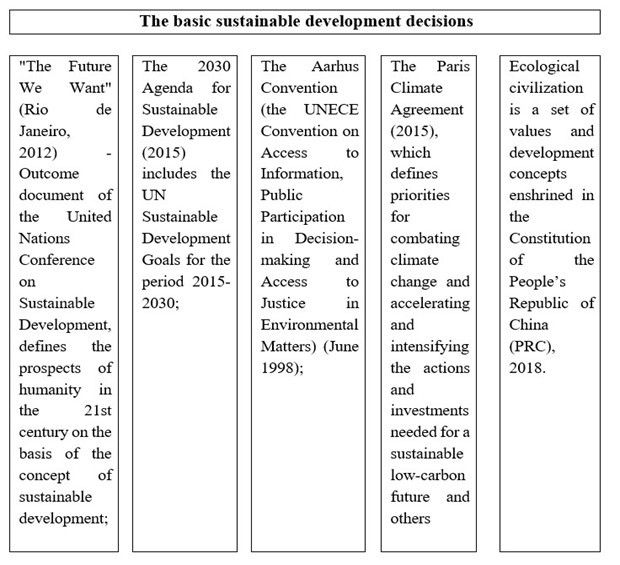
Figure 2 - The basic sustainable development decisions
The year 2022 marked the 50th anniversary of the seminal report "The Limits to Growth" by Dennis Meadows and his colleagues . This milestone provided an opportunity to reassess the WORLD3 model scenarios, which have demonstrated remarkable predictive accuracy over more than five decades. Analysis confirmed that the original data from the development scenarios presented in the 1972 publication remain relevant and consistent with contemporary observations (Fig. 3).
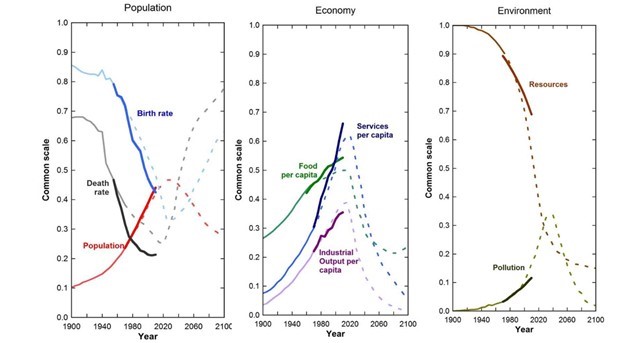
Figure 3 - The WORLD3 model ‘business-as-usual’ scenario till 2100:
solid line – MIT, with new research in bold; dotted line – limits to the growth "business-as-usual" scenario
“Dear Colleagues,
I have often described politics as the art of choosing which of several impossible outcomes you most prefer. It is important to envision good outcomes. It may be useful to strive for them. However, it is important to be realistic. The recent discussion about technology, alternative energy, and sustainability is based on several implicit assumptions, which, I believe, are unrealistic. At the risk of being an old grump and recognizing my own limited vision, I list here some statements that I believe from the study of science, history, and human nature to be realistic.
No. 1: There is no possibility that so-called renewable energy sources permit the elimination of fossil fuels and sustain current levels of economic activity and material well-being. The scramble for access to declining energy sources is likely to produce violence.
No. 2: The planet will not sustain close to 9 billion people at living standards close to their aspirations (or our views about what is fair).
No. 3: Sustainable development is about how you travel, not where you are going.
No. 4: The privileged will not willingly sacrifice their own advantages to reduce the gap between the rich and the poor (witness the US.) They lose their advantages, but unwillingly.
No. 5: Rapidly approaching climate chaos erodes society's capacity for constructive action before it prompts it.
No. 6: Expansion and efficiency are taken as unquestioned goals for society. They need to be replaced by sufficiency and resilience.
No. 7: History does not unfold in a smooth, linear, gradual process. Large, drastic discontinuities lie ahead soon.
No. 8: When a group of people believe that they must choose between options that offer more order or those affording greater liberty, they will always opt for order”.
Given the modest progress towards the Sustainable Development Goals (SDGs) – with an estimated completion rate of only 15% by the end of 2023 – and their subsequent evaluation by the scientific community, policymakers, and the public, it is evident that current sustainable development policies and SDG implementation have yielded insufficient results at this juncture. In contrast, a team of prominent Russian mathematicians, including V.A. Sadovnichy, A.A. Akaev , , I.V. Ilyin and colleagues , V.A. Gelovani , and A.N. Chumakov , has proposed an alternative vision for civilizational progress. They posit that global issues should be perceived not as insurmountable limits to growth, but as challenges amenable to resolution through international and intercultural cooperation .
In recent decades, the discipline of General Ecology at the Biological Faculty of MSU has experienced significant transformations, impacting both its administrative structures and the continuity of its scientific schools and academic community. Over the years, this area has united scientific groups such as "Phenomenology of Time" under the leadership of A.P. Levich, "Population and system Ecology" under the leadership of V.N. Maksimov and A.M. Gilyarov with the active participation of D.G. Zamolodchikov and D.V. Karelin, a group (A.T. Terekhin, E.V. Budilova) dealing with the issues of evolution of human life cycles, A.V. Oleskin "Biopolitics. Bioenvironment", L.V. Polishchuk "Population ecology and demography", D.N. Kavtaradze "Coherent development of nature and society, urban ecology" . The mutual cooperation of scientific groups of the General Ecology Department on Biological Faculty, the use of the V.I. Vernadsky, academician S.S. Schwartz, academician N.N. Moiseev, professor V.V. Nalimov theories, gave rise to a wide front of independent research. Much of the research comes from the work of the MSU team and Dennis and Donella Meadows scientific group (the Meadows Tree) , including long-term cooperation with the Laboratory of Ecological and Nature Conservation of the Biological Faculty MSU, recognition of Dennis Meadows as honorary doctor of Moscow State University, the original numerous hypotheses of Russian scientists (N.N. Moiseev, A.M. Tarko, V.A. Gelovani) on the possibility of formulating a systematic approach to human-biosphere coherent development, and the search for parameters and vital indicators that determine the state of biosphere ecosystems and cities suitable for the next generations.
There has long been a widespread belief in biology that every biological phenomenon, idea, discovery has evolutionary significance . For the Russian-speaking reader, the names of academician N.N. Moiseev and corresponding member Yablokov's RAS does not require clarification, but in our work they have a direct relationship as pioneers of ideas about the necessary level of generalization of the problem of "man and the biosphere" in their works who put forward the ideas of "co-evolution" (academician N.N. Moiseev), "controlled evolution" with whom the authors had many years of professional experience discussions and partnerships, during which both agreement with the general assessment of ideas about the evolutionary level of interaction processes and differences gradually emerged.
Our research introduces a conceptual framework for the coherence of anthropogenic and natural processes, along with a mechanism for their coherence, grounded in the probabilistic assessment of their manifestation within a defined development corridor , , . A fundamental aspect of this approach is that the probabilistic direction of events does not generate new entities but operates through existing and latently potential ones. Consequently, the biosphere's evolutionary processes remain subject to their inherent developmental laws, unaffected by direct, invasive human intervention.
A shared understanding exists among various activist groups and the international scientific community regarding the need to identify fundamental principles and factors that critically shape the formulation of hypotheses and approaches for the coherent development of society, nature, and civilization within the biosphere :
1. Absence of a holistic view of the world and scientific concept (destruction of the picture of a secular worldview (there is the concept in Russian culture of “mirovozzrenie” or outlook (philosophy, ideology) in society, and occupation of the resulting void with other ideas) – lack of connection between environmental education and outlook.
2. A person's increasing excess of the level of competence (and risk) that he is able to control.
3. The evolutionarily significant response of the biosphere is the main substance of the “ecological crisis”.
4. The lack of a holistic approach to environmental conservation (using symbiotic relationships (links) between biodiversity and mankind).
5. The "ecological (nature) timescale" principle is used to understand the temporal and spatial issues of environmental conservation (from the perspective of several generations).
The concept of the coherent development of society and nature was developed on the basis of the evolution of biosphere performance , , (Fig. 4).
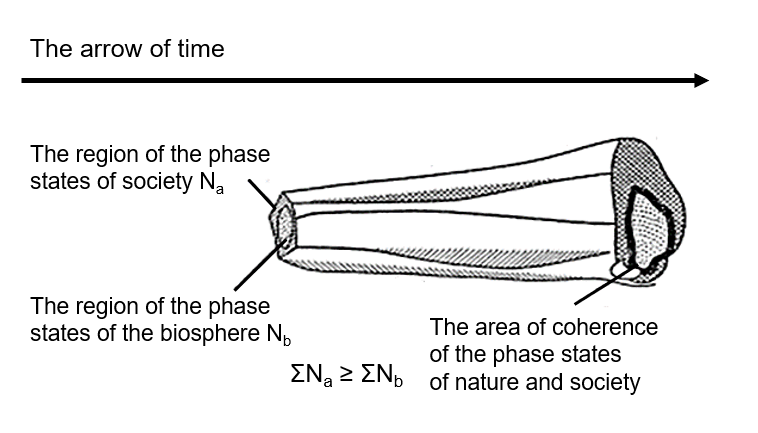
Figure 4 - Scheme of a possible corridor for the coherent development of humanity and the biosphere. Corridor of possibilities
The coherence of biosphere evolution and human development means the cooperation of the sciences initially in the common language and experimentally in common objects, exploring internally consistent working hypotheses. R.S. Karpinskaya emphasized that the responsibility of cognition, which has recently been grounded in a comprehensive examination of mechanisms of vital activity, requires "understanding any biological object as "multilayered", where its complete reproduction can only be achieved through the integration of various levels of study". . Moreover, the regularity of scientific knowledge is that "an experiment is brought to life by a certain level of theoretical knowledge, responds to its requests and makes sense only in the context of a particular theoretical concept" . The recent history of Russian science and biology management has forgotten these principles, and the need to return to them is dictated by the systemic complexity of the problems associated with the development of the human population on the planet.
Consequently, this study aims to introduce and demonstrate the efficacy of an interdisciplinary methodological framework for applying the concept of coherent nature-society development, using urbanized areas as a case study. The innovative aspect of the research lies in the synthesis of the evolutionary-synergistic "corridor of possibilities" concept with applied systems analysis tools – such as system dynamics, simulation gaming, and express territorial analysis – or the governance of complex "city-biosphere" systems. A central objective was the incorporation of this framework into educational curricula and the assessment of its effectiveness in the interdisciplinary training of ecologists and architects.
2. Research methods and principles
General characteristics of the interdisciplinary approach:
This study is based on an interdisciplinary approach that integrates methods from the natural sciences (ecology, biology), social sciences (urban studies, sociology), and pedagogy. The methodology is founded on complex systems theory, which allows the "city-biosphere" system to be treated as an integrated management object. The specific scientific fields whose methods were employed include: systems analysis (for modeling complex systems), urban ecology (for studying urban territories), and pedagogy (for assessing the effectiveness of educational programs).
Specific research methods:
The study is based on the synthesis of evolutionary-synergistic approach (the concept of a "corridor of possibilities" for coherent development) and applied systems analysis. The primary methods include:
System-dynamic simulation (We used models such as WORLD3 and Fishbanks Ltd. to simulate long-term scenarios of resource use and socio-economic development under different management strategies. These models served as a core tool for teaching decision-making under conditions of limited resources and potential risks);
Experimental interactive simulation models used in urban ecology and environmental planning (CoMPAS , "Econet" for coastal management practices and designing ecological networks of urbanized territories were employed. These games were conducted with students and stakeholders to collaboratively develop and test sustainable urban planning strategies);
Interdisciplinary expert express-analysis of territories incorporating approaches from ecology, geography, economics, and sociology: for case studies in cities like Galich, Ust-Luga, and Moscow, we formed expert teams integrating ecologists, architects, geologists, geographers, economists and sociologists. The analysis was based on field studies, GIS mapping, dynamic monitoring data and analysis of the territory;
Pedagogical experiment and analysis of educational modules: The effectiveness of the "Urban Ecology" module was assessed by evaluating the results of student projects, thesis works, feedback from participants, and external evaluation at international competitions (Grand Prix awards). The application of these pedagogical assessment methods provided a combined quantitative and qualitative measure of the educational module's effectiveness in fostering interdisciplinary competencies.
The organization of interdisciplinary projects rooted in the principles of coherent development necessitates assembling a team of specialists to address a common issue, integrating various disciplines to achieve a comprehensive understanding of the problems, which is visually represented in the following diagrams (Fig. 4, 5) .
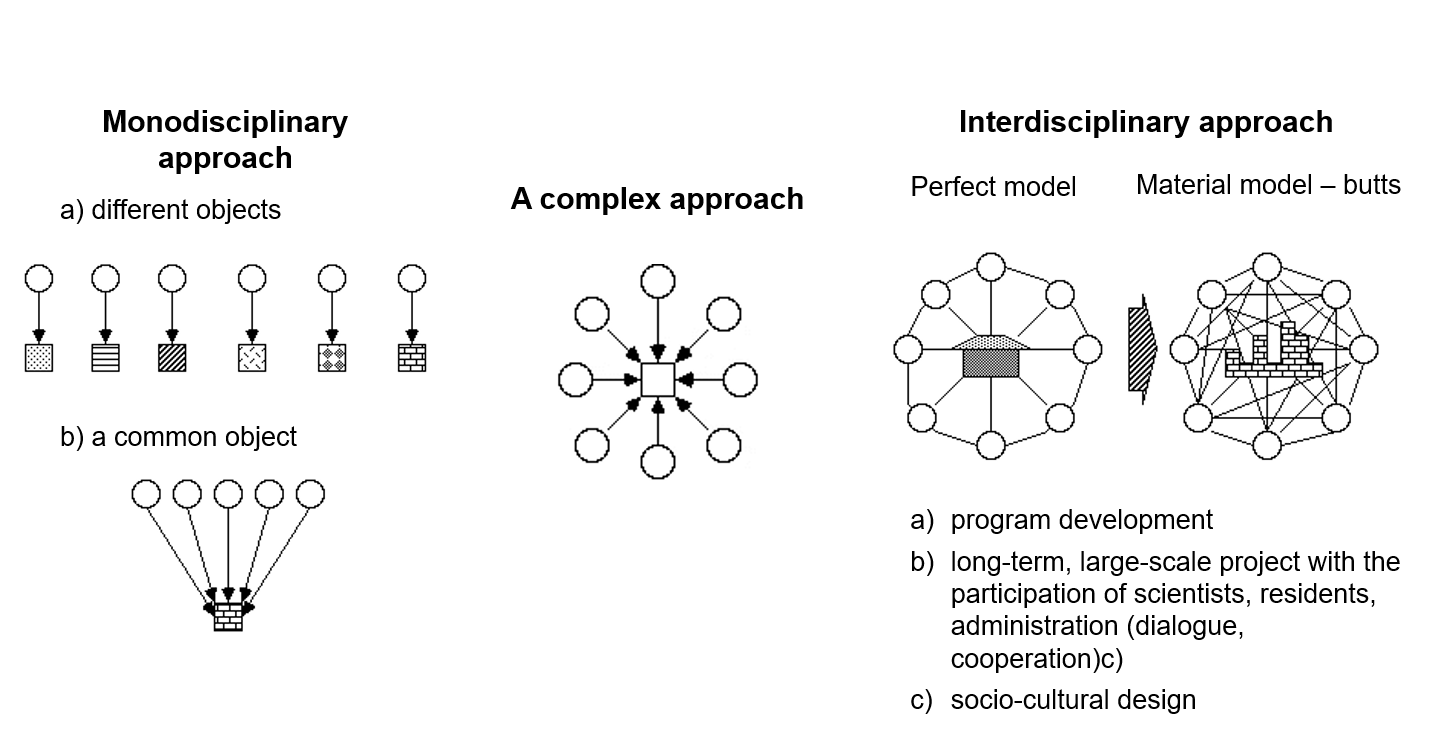
Figure 5 - Sequence of scientist integration in an interdisciplinary project. Ecopolis
Note: the figure illustrates the methodology of forming research teams for solving complex urban ecological problems
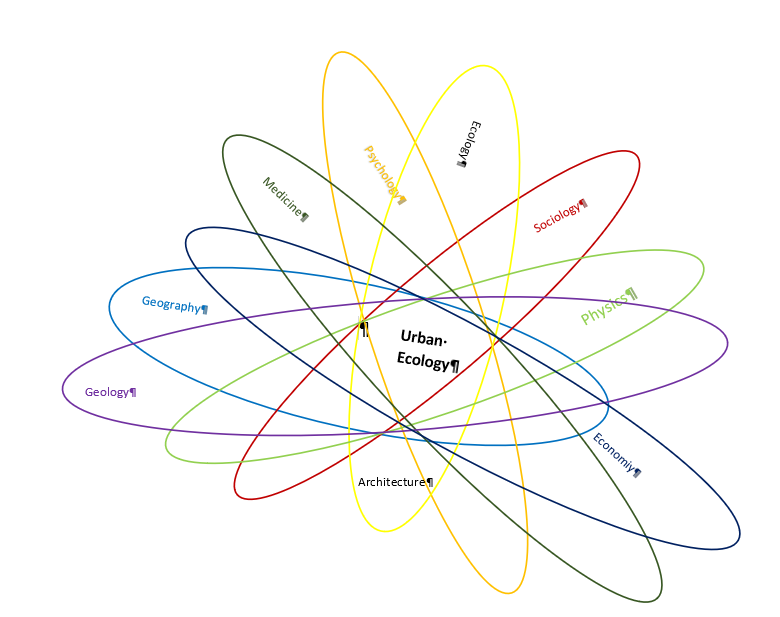
Figure 6 - Urban ecology interdisciplinary “flower”
Note: the diagram visualizes the core structure of the interdisciplinary approach used in the "Urban Ecology" module
A framework of criteria for sustainable urbanization has been established by researchers, prioritizing adherence to the ecological carrying capacity of a territory. This approach integrates the design of ecological networks – supported by innovative tools like the "Econet" simulation game – and actively involves both residents and administrative bodies in the planning and execution of environmental renovations. A cornerstone of this methodology is the principle of bioecological rehabilitation, which seeks to revitalize and conserve natural ecosystems in urban settings. The ultimate goals are to create a healthier human environment and elevate the overall quality of life.
3. Main results
The application of interdisciplinary methods and evaluation of educational outcomes
The application of the outlined interdisciplinary methods yielded the following results of practical significance for urban ecology, urban planning, and environmental education.
A successful model of interdisciplinary education has been established through the long-term partnership of MSU's Biological Faculty and Moscow Architectural Institute (MARCHI Academy), culminating in the development of the "Urban Ecology" module. It incorporated the following components:
Lectures: Dynamics of urboecosystems, principles of "Ecopolis", risk management and governance of complex systems.
Seminars: Utilization of interactive educational models to develop skills in managing complex systems (Fishbanks Ltd , Ecolopoly , CoMPAS (management of coastal territories) , design of ecological network models ("Econet") .
Field studies: Application of GIS technologies, studies accompanied by experts for conducting express-monitoring of territories.
Consultations between students and educators.
The Master's program tasked students with delineating the core, universal components of ecological urban planning across diverse project scales – from metropolitan areas and small towns to specialized clusters. This work extended to formulating key elements for a bio-ecological urban policy. A significant outcome was their development of a tool to harmonize the terminology of ecologists and urban planners: a comprehensive matrix outlining problems, approaches, and solutions pertinent to the biosphere, sociosphere, and other environmental spheres.
This collaborative project focused on strategically designing green infrastructure, acknowledging its importance in enhancing urban ecosystems and protecting biodiversity. Student proposals aimed to improve several key areas of sustainable urban development, notably by using a systems-thinking approach to tackle environmental and design obstacles. This process entails assessing demographic requirements, resource accessibility, and urban limitations to inform the development of eco-architectural projects. Additionally, proposals suggested incorporating waterway systems to enhance both the ecological and visual appeal of urban areas, ultimately creating more recreational possibilities. A central strategy focused on integrating ecological and urban systems by creating an "ecological framework": a network of protected biodiversity havens linked by green pathways, simultaneously aiming to minimize urban surface hardening.
The interdisciplinary educational module “Urban Ecology” resulted in 3 master's degree works and 1 course work (Preliminary Design) by students of the MARCHI under the guidance of architects professor N.G. Blagovidova and F.S. Kudryavtsev, ecologists D.N. Kavtaradze, E.A. Yamova, D.V. Risnik:
· Principles of Coherence Development of Urbanized and Natural Areas (Case Study of Galich Urban District, Kostroma Oblast) by K. Boldyreva;
· Principles of Eco-Safe Settlement Formation in a Sparsely Populated Natural Area Based on a Cluster Model by M. Pervakova;
· Ecological Reconstruction of Large-Scale Residential Areas in Moscow's Peripheral Ring by P. Zhupilova;
· Environmental Problems of Omdurman. Formation of a Network of Cultural Centres in the City of Omdurman (Sudan) by H. Mutaz.
Two of them (K. Boldyreva, P. Zhupilova) have received Grand Prix awards at the VIII International Competition of Graduation Works ARCH-Generation and a 1st place diploma from RAACS at the XXXII International Exhibition-Competition of Best Graduation Works in Architecture, Design, and Art (MOOSAO), 2023. These achievements serve as an objective measure of the high-quality education and students' successful mastery of the interdisciplinary approach.
An interdisciplinary educational module, "Urban Ecology", has additionally been given to biological students of MSU-BIT, Shenzhen, since 2019, North-East Normal University, 2024-2025 (People's Republic of China).
The module directed students' vision of urban ecosystems, principles of Ecopolis, environmental management, causes of environmental problems, solutions in planning and design, the concept of urban planning, the functioning of environmental services, and the environmental policy of the city.
Functioning as a complex, multifaceted system, urbanization serves as a critical interface between human societies and the natural environment. Research on highly urbanized territories, or "urbioms", has stimulated the creation of interdisciplinary methodologies. These approaches allow scholars to utilize dynamic modeling for analyzing the complex dynamics of urban systems and assessing the consequences of large-scale policy interventions . The historical trajectory of urbanization, together with its planning and architectural manifestations, demonstrates its inherent inclusiveness, persistent dependence on the biosphere's condition, the emergence of novel functions, and the imperative for adaptation – all evolving across short-, medium-, and long-term timescales.
4. Discussion
The obtained results demonstrate the practical applicability of the concept of coherent development through the proposed methodological toolkit. The interactive simulation models and games ("Econet", "CoMPAS") serve as instruments for finding a balance (coherence) between anthropogenic development and the natural framework, which is a direct development of the ideas of V.I. Vernadsky about the biosphere and N.N. Moiseev about co-evolution.
The success of the educational module and the high assessment of student projects confirm that the formed interdisciplinary approach contributes to the development of systemic thinking among specialists, which is a key competence for managing sustainable development of complex socio-ecological systems. Implementation of pedagogical evaluation methods – such as project assessments, external expert reviews in competitive settings, and structured feedback – has validated the success of the created educational programs in training qualified personnel for tackling practical problems in urban ecology and urban development.
Thus, the study demonstrates that the integration of system dynamics modelling from complexity science, expert territorial analysis from urban studies, and innovative pedagogical assessment methods provides a viable interdisciplinary framework for addressing the challenge of coherent development in urban ecosystems.
5. Conclusion
The key outcomes of the accomplished work can be summarized as follows:
1. A significant contribution was made to advancing the scientific legacy of V.I. Vernadsky's biosphere concept through the lens of modeling the coherent evolution of nature and society. This is evidenced by the successful training qualified specialists proficient in applying interdisciplinary approaches to the management of complex socio-ecological systems, through the example of urban landscapes and ecosystems.
2. The conceptualization of the urban environment as an integral component of the biosphere (the "urban biome") facilitated the development of a unique methodological framework based on the "Ecopolis" concept. This framework provides a foundation for organizing multidisciplinary research and has spurred the creation of innovative pedagogical tools, including participatory modeling and system dynamics simulations.
3. A major practical achievement was the implementation of an interdisciplinary educational module for architects and ecologists, which has become a cornerstone for training a new generation of urban ecology specialists. The effectiveness of the module was confirmed through pedagogical assessment methods: the successful defense of master's theses and their awarding of the highest honors (Grand Prix) at international competitions, which demonstrates the practical relevance and efficacy of the educational approach.
The module's academic foundation is supported by the monograph "Urban Ecology: Problems and Opportunities" , which was recognized with a 2nd Degree Laureate Diploma in 2023 for outstanding scientific and educational literature in architecture, design, and art.
4. The practical significance of the work was confirmed at the round table "Urboecology" held within the conference of Moscow Architectural Institute (MARCHI) "Science, Education and Experimental Design" (April 2025). The developed interdisciplinary module "Urban Ecology" and monograph "Urboecology: Issues and Opportunities" represent a concrete response to the identified need for a systematic scientific-methodological approach to environmental education in architectural universities, uniting ecological, engineering, sociocultural, and economic aspects of urbanized territories. Experience of inter-university cooperation (MSU, MARCHI, universities of China) and methods tested in the module (interactive models, dynamic monitoring) serve as a basis for developing unified standards, curricula, and project evaluation criteria required to overcome isolation of environmental issues in education. Further development of this direction implies strengthening interaction with specialized ministries (Ministry of Construction of Russia, Ministry of Education and Science of Russia).