
Abundance and Habitat Preference of Eritrean Endemic Agama Acanthocercus Annectans (Blanford, 1870) in Subzone Adi Keyh, Eritrea
Abundance and Habitat Preference of Eritrean Endemic Agama Acanthocercus Annectans (Blanford, 1870) in Subzone Adi Keyh, Eritrea
Abstract
Acanthocercus Annectans, commonly known Eritrean Rock Agama, is an endemic species of the Agamidae family found exclusively in North-East Africa, including Eritrea, Djibouti, Ethiopia, Somalia, and northern Kenya. There is a notable deficiency in studies regarding herpetofauna in these regions, particularly concerning Acanthocercus annectans. This research focuses on assessing the abundance and habitat preferences of Acanthocercus annectans (Blanford, 1870) in the Adi Keyh sub-region of Eritrea. To effectively assess habitat preferences, the study area was classified into three distinct sites based on Resource Availability (RA), Human Interference (HI) and Vegetation Cover (VC). The study was conducted from May 15 to September 15, encompassing a total of 45 days of observation, with 15 days dedicated to each site. During this period, a Visual Encounter Survey (VES) was employed to record individual species, noting their age differences and sexual categories over a duration of 5 hours each survey day (9 AM – 2 PM). Out of a total of 304 individuals recorded, the highest number (184) was observed at Site 1, characterized by high human interference, high resource availability, and low vegetation cover. In contrast, the lowest number (46) was recorded at Site 2, which exhibited medium levels of human interference, resource availability, and vegetation cover. From the survey across all sites, adult males were recorded in the highest numbers, while old females were found in the lowest numbers. Species abundance was notably higher during periods of increased rainfall and at optimal temperature. The species predominantly settled in outcrop cracked rocks facing east. While sunlight positively influenced their abundance, there was a negative correlation with vegetation cover. Interestingly, anthropogenic activities, such as cultivation, did not significantly affect the abundance of these species. To achieve conservation goals for these species, further research on their abundance and conservation status in the study area is recommended.
1. Introduction
Almost all reptiles inhabit the tropical regions of the world . The phylogeography of species is influenced by environmental variability and historical geological events . These reptiles are typically found in outcrops and rocky hills within semi-desert and savanna regions. They are native to Eritrea, Djibouti, eastern Ethiopia, Somalia, and northeastern Kenya, but their current distribution is primarily limited to Eritrea, Somalia, and Ethiopia , . Eritrea boasts a rich diversity of Agama species due to its variable rainfall, climatic conditions, and diverse topography . Among these species, Acanthocercus annectans (Blanford, 1870) is endemic to the country. First described in Eritrea in 1870, this lizard is commonly known as the Eritrean Rock Agama, a name derived from its country of origin . In addition, Abundance and distribution of reptiles are influenced by historical and climatic factors, environmental gradients, and landscape characteristics , , . These factors also impact reptile reproduction . Humidity, habitat type, and disturbances play significant roles in the diversity and distribution of reptile species . As poikilothermic organisms, reptiles tend to increase in abundance with rising temperatures, but their numbers decline once temperatures reach an asymptotic level , , . According to the IUCN Red List assessment, reptiles face no major threats and have remained stable since 2014, categorizing them as Least Concern. These species are terrestrial and diurnal, inhabiting forests, wetlands (inland), savannas, and rocky areas (including inland cliffs and mountain peaks) . Additionally, they can be found on walls and in the centers of urban areas. Their elevation range extends from sea level in Eritrea to over 2100 meters above sea level in Ethiopia and Eritrea . From the six agro-ecological zones in Eritrea, Acanthocercus annectans is distributed primarily in the moist highland and semi-desert regions . This species mainly relies on insects and other arthropods for food, with a particular preference for ants, as well as fruits and cockroaches , . Lizard species typically thrive and reproduce during the monsoon season (August and September) and show the least activity in winter . These lizards live in loosely structured colonies, with males often basking on the peaks of mountains . Unlike many other species, agamas are not significantly impacted by habitat loss or land degradation caused by agricultural expansion and fuel wood extraction . The primary food source for agamas insects exhibit various adaptations for waste disposal, suggesting that human activities may actually enhance agama populations by increasing insect availability in modified environments . Since 1994, no research has been published on this species in Eritrea , . Therefore, this study aims to assess the abundance and habitat preference of Acanthocercus annectans in the sub-zone of Adi Keyh, Eritrea.
2. Research methods and principles
2.1. Study area
Adi Keyh is a subzone located in the southern region of Eritrea, positioned between longitudes 39°37'30" and 39°39'40" and latitudes 14°87'40" and 14°84'20", with an average elevation of approximately 2,470 meters above sea level. The sub-zone encompasses approximately, 7161.45 km², of which 7000 hectares are currently allocated for agricultural use, alongside around 2000 hectares designated as reserve areas. This subzone is situated in one of Eritrea's mountainous regions, characterized by its significant elevation and diverse topography. This area is notable for being the highest point in the country, characterized by its hilly landscapes and diverse topography, and it borders the Northern Red Sea region. The climate in Adi Keyh is classified as semi-arid, featuring warm and mild temperatures throughout the year. It falls within the Moist-Highland Agro-ecological zones of Eritrea, as noted by Molwe
. The region experiences its rainy season from the last week of June to the first week of September, which is vital for supporting local agriculture. The sub-zone encompasses 21 local administrations and 109 villages, with a total population of 66,246. Approximately 85% of residents are directly involved in farming and pastoralism .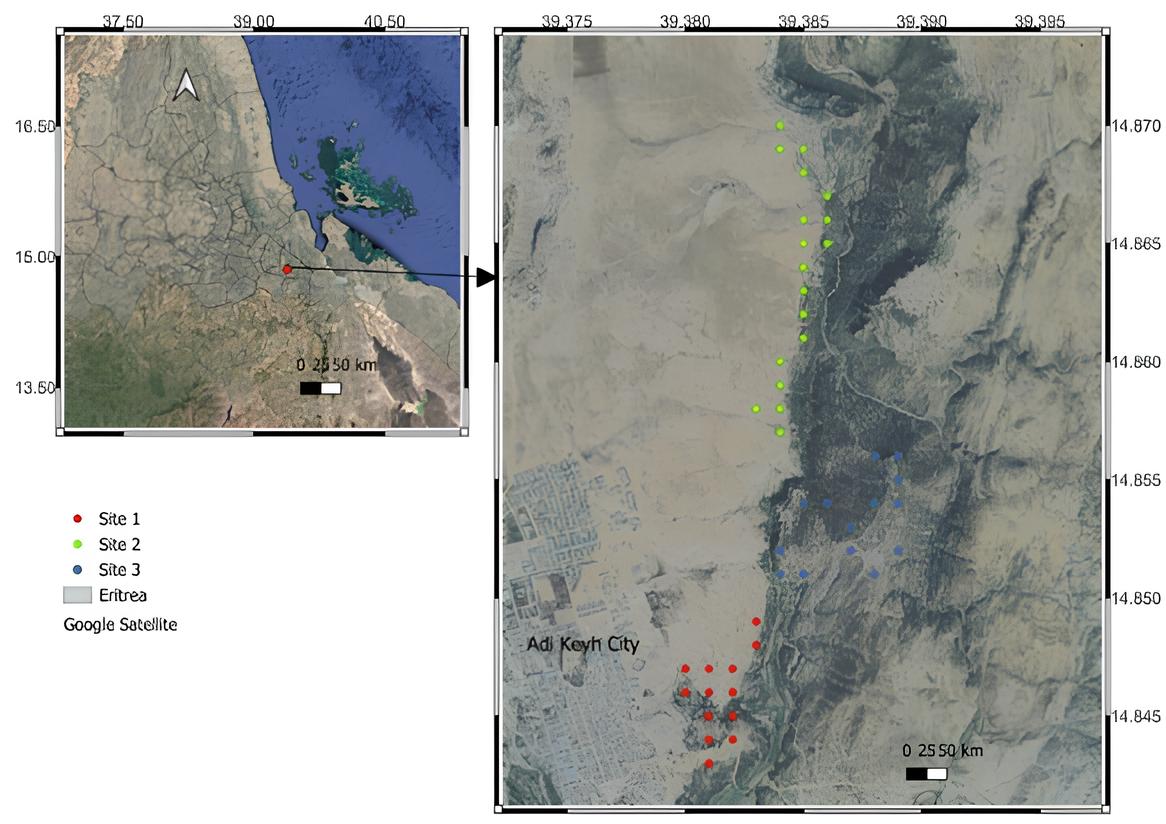
Figure 1 - Landscape map of the research sites
Note: Google map
2.2. Methodologies
The study was conducted using both direct methods, specifically a visual encounter survey, and indirect methods, such as examining snakes' skins . It took place from mid-May to mid-September, spanning 45 survey days with 15 days at each site. A total of 225 hours were dedicated to the surveys, averaging 5 hours per day — with 3 hours in the morning and 2 hours in the afternoon. The study area was classified into three variable categories based on anthropogenic intervention , resource availability, and vegetation cover, labeled as Site 1, Site 2, and Site 3. Five age categories were established according to color and size, as outlined by Polynova : Juvenile for individuals under one-year-old, Adult Male and Adult Female for those aged between one and three years, Old Male and Old Female for individuals older than three years. This structured approach facilitated a comprehensive assessment of reptile populations within the designated ecological zones.
In addition, data on sex and individual locations — specifically latitude, longitude, and altitude — were recorded. Following Karthik's methodology, a datasheet was used to capture various data points, including the common name, scientific name, number of individuals observed, locomotion at the time of sampling, GPS coordinates, and the use of binoculars for precise species identification. Given their quick escape behavior, shyness, and ability to camouflage, as well as their tendency to seek temporary refugees in response to human presence or climatic changes, I employed active recording techniques. To minimize disturbance to the reptiles, I wore clothing that blended with the habitat and slowly moved throughout the survey area . The data were analyzed using Microsoft Excel 2007, and a one-way ANOVA was performed to evaluate the effect of species abundance and habitat preferences, with age and habitat treated as independent variable and abundance as the dependent variable. After conducting Anova, HSD was used to determine which specific site means differ from each other.
3. Abundance and Habitat Preference
A total of 225 hours were dedicated to visual encounter surveys, with 75 hours allocated to each site. The abundance of these species exhibited significant differences due to climatic factors such as sunshine, temperature, fog, and rainfall, along with vegetation cover, human interference, and resource availability. Similar findings were reported by Žagar , Chou , Valencia-Elbahi , and . The highest abundance was recorded in September when the temperature was optimal at 23°C, while the lowest abundance occurred in late May and early June when temperatures peaked at 25–27°C during the study period. All habitats showed maximum abundance from all sites oriented towards the east. Even under optimal temperatures, only a few individuals were abundant after 2 PM, when the sun shifted to the west side of the habitat. During rainy and foggy conditions, especially in July, these species entered a state of complete hibernation in their habitats . This behavior presented a challenge to the study's timeline, as it restricted opportunities for observation and data collection.
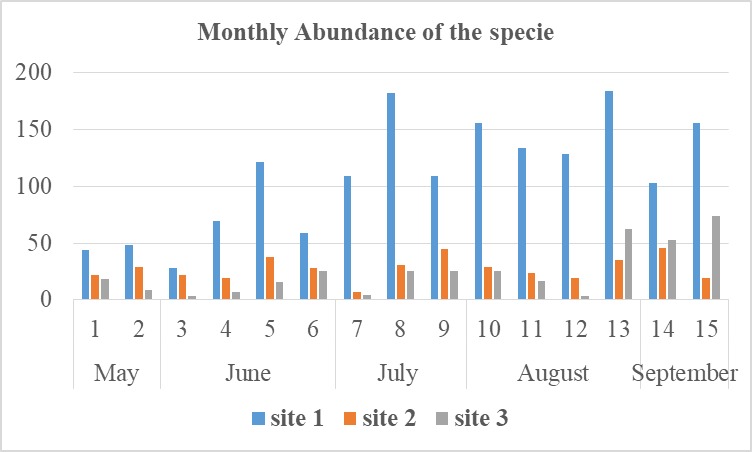
Figure 1 - Monthly Abundance of of Acanthocercus annectans
4. Discussion
Maximum individuals were recorded in July, August and September, primarily due to the optimal temperature conditions at the site during this month. The full sunlight available also plays a significant role, as it influences the abundance of the species in relation to ideal temperature levels. Additionally, resource availability, such as insects and worms, is high during this time, and there are numerous fig remnants in the area that further support the population. Unlike in May and early June, the minimum numbers of these species were recorded. During these months, temperatures can reach up to 30°C, exceeding the threshold preferred by the species. As a result, they tend to hibernate and are only active on the surface in the early morning until around 10 AM. Additionally, food resources such as fig remnants and insects are limited due to low humidity during this period. The presence of fog and rain in July and August restricts the activity, metabolism, and reproduction of these species. As a result, they enter a state of complete hibernation within their habitat. This clearly indicates that these conditions, along with extreme temperatures, create a harsh environment for them.
5. Conclusion
In conclusion, the study area, particularly habitats like Site 1, shows significant potential for the abundance of Acanthocercus annectans . This is largely due to favorable environmental conditions, including sun-exposed outcrop rocks and a rich supply of food sources such as worms, insects, arthropods, and figs from human remnants and waste. Additionally, there is minimal shading from high vegetation; only small shrubs are present, while figs are particularly abundant. The availability of large outcrop rocks facing east, some reaching heights of over 6 meters, further enhances the habitat. Furthermore, the presence of municipal waste and feces dropped by people in the area creates a conducive environment for a large number of insects to thrive. While the minimal presence of species at Site 2 is primarily attributed to the lack of high outcrop rocks. The only available habitats for these species are at ground level, which increases their vulnerability to predators and humans. The species that are present have small home ranges and typically move only short distances from their habitats. In the event of a threat, they seek refuge in temporary shelters nearby.
The significant difference in species abundance, particularly among juveniles at Site 1 compared to other sites, is largely due to the availability of predator-free habitats for their eggs. In contrast, while Site 3 offers favorable habitats, the presence of dense vegetation restricts both the abundance and sunlight exposure for the species. This similarity between Sites 2 and 3 highlights how high vegetation can limit the growth of populations despite suitable conditions. The higher number of juveniles compared to older individuals indicates that the conservation status of the species across all sites is in good condition. At Site 1, there is significant human disturbance due to activities such as carrying water, gardening, and people enjoying the early morning sun, along with a pathway leading from the neighboring rural area. However, these disturbances have habitats remain conducive to their survival and proliferation, and a minimal impact on the abundance of the species. Overall, the findings highlight the importance of preserving such environments to ensure the continued abundance of Acanthocercus annectans.