
Определение технического состояния конструкций зданий с использованием нейро‑нечёткой логики
Определение технического состояния конструкций зданий с использованием нейро‑нечёткой логики

Аннотация
Объектом исследования является техническое состояние наружных кирпичных стен зданий. Для решения задачи определения их общего технического состояния предложена модель, использующая гибридный подход, объединяющий интерпретируемость нечеткой логики и обучаемость нейронных сетей.
Разработана нейро-нечеткая сеть с пятью слоями и шестью правилами нечеткого вывода. Определение технического состояния наружных стен выполняется на основании 12 диагностических признаков. Сформирована обучающая выборка из 100 фасадов на основе анализа данных 20 реальных объектов. Для устранения дисбаланса классов при обучении применялись весовые коэффициенты. Программная реализация выполнена в среде VS Code на языке Python с использованием библиотек TensorFlow и Keras.
Точность модели на тестовой выборке достигла 80–88% (в зависимости от инициализации весов), уверенность прогноза составила 0.80–0.99. Точность на 4–8 процентных пункта выше, чем у моделей машинного обучения Random Forest и AutoGluon, обученных на тех же данных. При проверке на двух реальных зданиях, не входивших в обучающую выборку, предсказанные категории технического состояния полностью совпали с экспертными заключениями. В пограничных случаях уверенность прогноза снижалась до 0.65–0.72. Впервые нейро-нечеткая логика адаптирована для диагностики кирпичных стен, что обеспечивает сочетание интерпретируемости нечетких правил с обучаемостью нейронных сетей и позволяет минимизировать субъективность экспертных оценок.
1. Introduction
Evaluating the technical condition of building structures remains a challenging engineering task with direct implications for structural safety. The primary indicator used to quantify the level of structural risk is the category of technical condition. Currently, this category is assigned predominantly through expert evaluation. Accurate classification requires simultaneous consideration of multiple interdependent parameters, solid professional expertise, and extensive practical experience gained during inspections.
These challenges have stimulated increasing attention to decision-support approaches. In recent years, decision support systems (DSS) that incorporate artificial intelligence methods have gained significant traction. As noted by A.R. Hairudin and et al., traditional methods for assessing the condition of structures and buildings are time-consuming, subjective, and poorly scalable, whereas machine learning opens up opportunities for automation and improved diagnostic accuracy . The implementation of such systems in practice will not only solve the identified problems, but also become an indispensable tool for both novice and experienced experts. Automated diagnostic systems and decision-support platforms have already been successfully applied in numerous other engineering fields, thereby demonstrating the practical viability of the concept. A complete DSS typically comprises an interactive user interface, data storage modules, and a set of regulatory or normative constraints. While the long-term objective is the development of a comprehensive decision-support system, the present study concentrates on constructing a novel model that constitutes its core analytical component.
Fuzzy logic is an effective, accurate and interpretable method for formalizing expert knowledge and dealing with uncertainty in construction diagnostics. For example, Lendo-Siwicka M. et al. proposed a method for assessing the technical condition of historic buildings (architectural monuments) based on fuzzy logic. The authors emphasize that expert evaluations collected during inspections tend to be formulated with a degree of vagueness. By applying fuzzy inference, these qualitative statements can be formalized, which helps to diminish their subjective impact. Assessments of the technical condition of individual building elements — including the underground part, load-bearing walls, floors, roof and other components — were taken as input variables, whereas an integral indicator characterizing the condition of the building as a whole constituted the output. A total of 125 rules underpinned the diagnostic process. The proposed technique was examined on five historic buildings situated in Warsaw. The authors emphasize that continued accumulation of assessments generated by this method will allow the formation of a knowledge base intended for the subsequent application of neural networks in forecasting .
Earlier, G.G. Kashevarova and Yu.L. Tonkov developed a mathematical model based on fuzzy set theory and fuzzy logic to assign a technical condition category to building structures. The model calculates a crisp value of the condition category (normative, serviceable, limited‑serviceable, emergency) of flexural reinforced concrete structures (beams, slabs) based on fuzzy linguistic evaluations of parameters (crack width, concrete strength, etc.). The system processes more than 90 controlled parameters using more than 5,000 rules in a fuzzy knowledge base and individual membership functions for each parameter . However, fuzzy systems are difficult to develop and extend because the design of rule bases and membership functions is labour-intensive, depends heavily on expert input, and may introduce subjective bias.
Alongside the further development of fuzzy logic, machine-learning approaches such as artificial neural networks, Random Forest algorithms, and other techniques based on learning from accumulated data have gained increasing attention. The key advantage of these methods lies in the ability to self-learn and identify complex, non-obvious patterns directly from large amounts of heterogeneous data, which is especially valuable under multifactor and uncertain conditions inherent in the assessment of technical condition. For example, in recent studies by H. Begić Juričić and H. Krstić the authors proposed the use of machine learning methods for a comprehensive assessment of the condition of school buildings. The model used 7 input parameters, including: the age of the building, the history of repairs, and the technical condition of its main structural elements (doors, windows, exterior walls, roof, roofing, and floor). The output variable was the predicted overall condition rating of the building . In another study, L. Chomacki et al. used artificial intelligence to assess the risk of damage to masonry buildings during underground mining using a naive Bayes classifier and Bayesian networks. The input data included 26 parameters: geometric and structural parameters of buildings, year of construction, technical condition, impacts from mining, etc. At the output, one of four possible categories of risk of damage to the building was determined . S. Wang et al. proposed using a machine learning method to assess the safety of buildings and structures. The proposed multilevel cascade system first classifies damage images and then performs their precise pixel segmentation. Then, based on the extracted parameters, the safety level is determined using the Random Forest model. The paper considered 7 key parameters: the type of material, the number of cracks, the total length of the cracks, the maximum crack width, the delaminated area, the orientation of the crack, and the presence of exposed reinforcement . It should be noted that machine learning is most often used in the development of DSS to determine the technical condition of building structures and buildings, while there are no studies aimed at assessing the technical condition of exterior brick walls based on existing defects and strength characteristics of materials.
Although a considerable body of work has examined fuzzy-logic and machine-learning techniques for evaluating the technical condition of building structures — particularly brick masonry — several practical shortcomings persist. First, expert judgments remain subjective and often inconsistent because a unified, standardized set of diagnostic indicators is lacking; consequently, inspection results obtained at different times or by different specialists are difficult to compare on a common scale. Secondly, machine learning-based methods can demonstrate high accuracy, but lack sufficient interpretability for engineering solutions. At the same time, approaches based only on expert rules are limited in scalability and flexibility when dealing with new types of defects or materials. Thirdly, there are no specialized solutions for brickwork. Most of the existing studies have been performed either not for brickwork, or use input parameters that do not include its strength characteristics, which are equally important in determining the technical condition.
These difficulties require the search for new solutions capable of providing both high accuracy, transparency and reproducibility of the results. A practical way to address these limitations is to employ neuro-fuzzy models, which integrate fuzzy inference with the learning capability of neural networks. This approach makes it possible to formalize expert knowledge in the form of fuzzy rules, while providing automatic adjustment of the parameters of these rules based on empirical data. This creates the prerequisites for automating the decision-making process based on the inspection results, minimizing the influence of subjective factors and increasing the reliability of expert opinions, which is confirmed by available research. For example, in the study by A. Baghdadi et al., the effectiveness of the adaptive neuro-fuzzy inference system (ANFIS) in determining the strength of concrete beams was demonstrated. The authors also emphasize that ANFIS shows high stability of results, while the classical neural network yields chaotic errors when repeating the same task . In another study, Y. Peng and H. Gao developed models for predicting the bearing capacity of driven piles using machine learning methods and the ANFIS. The results of the study showed that ANFIS is superior to machine learning methods . In a study by R. Trach et al. , a hybrid approach based on fuzzy logic and neural networks demonstrated high efficiency in assessing the condition of engineering structures, namely bridges, ensuring accuracy and interpretability. Considering this, a similar approach is proposed in this paper for the diagnosis of brick walls.
The study addresses the assessment of exterior brick masonry walls. It seeks to develop a neuro-fuzzy model for classifying their technical condition from inspection-based data.
The work includes the following stages:
• compiling a dataset from inspection reports for existing buildings;
• developing and training a neuro-fuzzy inference model;
• comparing its performance with that of previously developed machine-learning models on the same dataset;
• validating the model using inspection data for two buildings that were not included in training.
2. Research methods and principles
The input variables describing the technical condition of the exterior brick wall are 12 diagnostic indicators: damage to the protective and finishing layers, the length of cracks, the width of crack openings, the presence of moistened wall sections, the condition of horizontal waterproofing, the deviation of the wall masonry from the vertical, the presence of cracks at the intersection of longitudinal and transverse walls, the amount of reduction in the cross-section of the brick masonry, the strength of the masonry, the amount of reduction in the bearing capacity of the masonry, damage to the masonry of the support units, damage to the lintels. The training dataset was manually compiled from technical inspection reports for 20 buildings. To increase the number of observations and obtain facade-level assessments, each facade was treated as an independent diagnostic unit. As a result, a dataset of 100 facades was formed, which is available in the Zenodo open repository .
When processing the technical condition reports, factors that negatively affect the training of models were identified. The main one was the imbalance of classes: serviceable and limited-serviceable conditions prevail over standard and emergency conditions. In such conditions, the error rate alone cannot serve as an objective measure of classification quality, since the model, striving to minimize the average error, will ignore rare classes and predict the most frequent one. To solve this problem, class weights were introduced, providing a greater penalty for errors in rare classes compared to frequent ones.
The analysis of the training sample showed that the distribution of input variables is heterogeneous and disparate, and the relationship between them and the final category of technical condition has a complex nonlinear character. It is difficult to identify such dependencies using traditional statistical methods, which confirms the expediency of using approaches based on intelligent systems.
Before training the model, the collected data were preprocessed. At the first stage, normalization was carried out, which means bringing all feature values to a single range from 0 to 1 to eliminate the influence of their scale. The data were then randomly divided into training (75%) and test (25%) samples. An additional 15% of the training sample was allocated for fine-tuning the model parameters as a validation set.
The neuro‑fuzzy‑logic‑based program was implemented in the Visual Studio Code (VS Code) development environment in the Python programming language using the TensorFlow library version 2.19.0 and the built-in Keras API version 3.10.0, which provides ready-made tools for building and training deep learning models.
When evaluating the models, accuracy was determined — the proportion of correctly classified examples, the value of the loss function, and confidence in the prediction — the maximum probability of the predicted class.
3. Main results
A neuro-fuzzy network (NFN) was selected to implement the proposed approach because it enables fuzzy rules to be adjusted using data from field inspections. The NFN is a five-layer feedforward network, similar to ANFIS (adaptive network based on a fuzzy inference system), but adapted to work with 12 input parameters. This approach enabled the number of membership functions and fuzzy rules to be configured more flexibly than in a conventional ANFIS implementation. For a problem with 12 input variables, direct ANFIS construction may lead to a rapid growth in the number of rules . The NFN architecture, adapted to solve the problem, is shown in Figure 1.
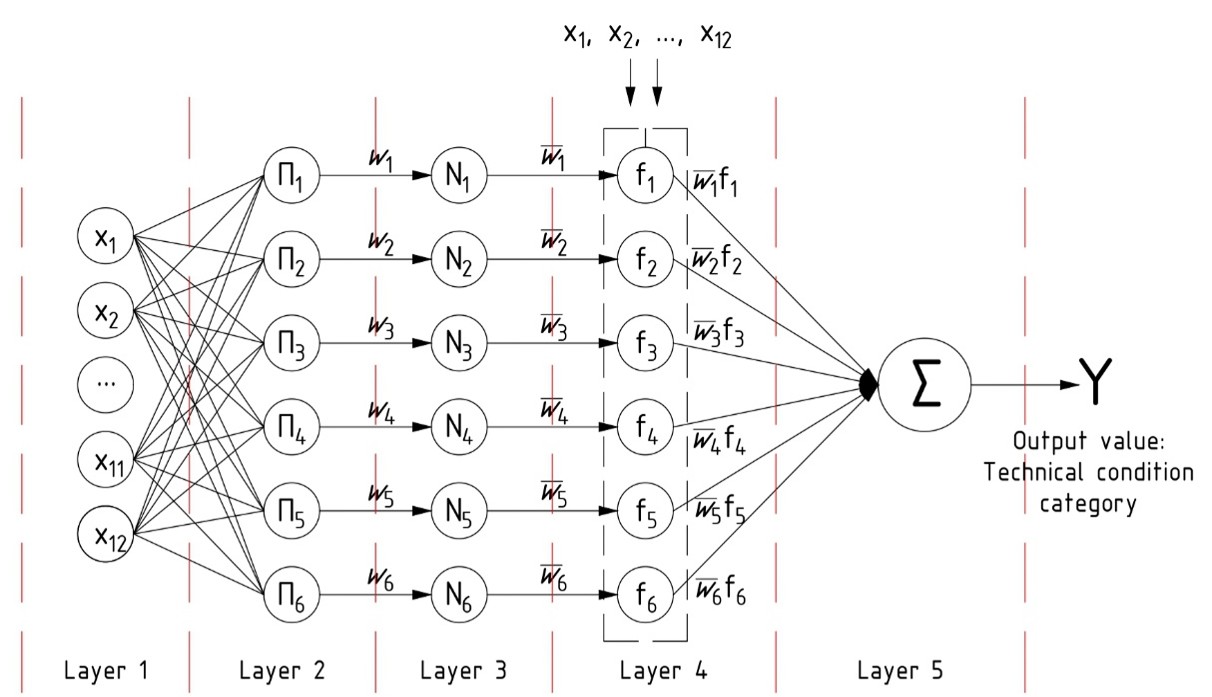
Figure 1 - Architecture of a neuro-fuzzy network
The fourth layer calculates the consequent of each Takagi-Sugeno rule as a linear function of the input variables . The contribution of each consequent is weighted by the normalized firing strength of the corresponding rule. At this stage, all the parameters are adjusted during the training process.
The fifth layer contains a single node that calculates the final crisp value by summing the results of all the rules of the previous layer. The resulting output value of Y represents a crisp quantitative assessment of the technical condition. On its basis, defuzzification is performed, that is, the transformation into a linguistic variable in the form of a category of technical condition.
Thus, the applied architecture of the NFN allows the model to automatically adjust both the parameters of the membership functions and the weights of the rules, which ensures high interpretability and accuracy. Unlike the machine-learning methods considered in the review, the proposed model retains interpretability because its fuzzy rules can be extracted and analyzed by an expert.
It achieved accuracies of 99% and 95% for the training and validation datasets, respectively. The final accuracy on the independent test dataset ranged from 80 to 88%, depending on the random initialization of the weights. The model's confidence in the prediction varies from 0.8 to 0.99 and only in rare borderline cases decreases to 0.6 with a general range from 0 to 1.
To conduct a comparative analysis on the same dataset, the models described in detail in and implementing machine learning methods, namely Random Forest and AutoGluon, were used. A comparison of the results obtained in the test sample is presented in Table 1.
Table 1 - Accuracy on the test set
Model | Accuracy on the test set, % | Prediction confidence |
Random Forest | 70 to 76 | 0.6 to 0.86, rarely decreased to 0.48 |
AutoGluon | 76 to 80 | 0.6 to 0.9, rarely decreased to 0.45 |
Neuro-fuzzy logic | 80 to 88 | 0.80 to 0.99, rarely decreased to 0.6 |
The experiment conducted on a single dataset demonstrates that a hybrid approach based on neuro-fuzzy logic provides higher classification accuracy and generates significantly more confident predictions, which is critically important for diagnostic and decision support tasks.
A comparison of the results obtained with data from other researchers, which were also obtained on limited sets of initial data, confirms that the achieved accuracy is acceptable for the tasks of preliminary assessment of technical condition. Thus, in the study by H. Begić Juričić and H. Krstić the accuracy of determining the technical condition of school buildings using artificial neural networks in the test sample reached 94%, and in the new data it decreased to 79.9% with the initial sample of 166 examples . In the article by L. Chomacki et al., two models for assessing the risk of damage to masonry buildings during underground mining were trained on 594 examples (inspection data). In the test sample, the naive Bayes classifier showed an accuracy of 75.86%, and the Bayesian networks showed an accuracy of 87.07% . Despite the fact that some of these methods show comparable or higher accuracy, they are inferior to the proposed model in interpretability, and also require a significantly larger amount of training data.
Note that in the study , when assessing the safety of buildings, Random Forest showed an accuracy of 87% with 7 input parameters, in our work it showed an accuracy of 70–76% with 12 input parameters. This difference is primarily due to the difference in the training samples, as well as the larger number of factors taken into account in our task, which significantly complicates the classification. In this regard, a direct comparison of our results with those of is not entirely correct, but even with this in mind, the difference in accuracy of about 11% is not critical, given the difference in the complexity of the tasks and the increase in the number of input parameters by more than one and a half times.
To confirm the practical applicability and operability of the developed model, an additional test was carried out on two real buildings that were not included in the training and test samples: a three-storey brick building in Moscow (Russia) and a four-storey brick building in Saint Petersburg (Russia). Three facades were considered for each object, as no damage was detected on the other facades during the inspections. Technical inspection reports for both buildings, together with completed tabular forms containing the examination results for their exterior brick masonry walls, are available in the Zenodo open repository and were used as input data for the proposed neuro-fuzzy model .
Table 2 shows a comparison of the diagnostic results of the technical condition of exterior brick walls obtained using the developed model with the categories of condition determined during the field survey.
Table 2 - Comparison of predicted and actual categories of technical condition of facades
Examined facility | Façade axes | Technical condition category | |||||
Confidence for class | Predicted category | Actual category according to inspection | |||||
1 | 2 | 3 | 4 | ||||
Three-storey brick building | А-Ж | 0.000 | 0.123 | 0.876 | 0.001 | Limited serviceable | Limited serviceable |
Ж-А | 0.001 | 0.098 | 0.898 | 0.002 | |||
2-1 | 0.008 | 0.079 | 0.903 | 0.010 | |||
Four-storey brick building | 1/Ж-А | 0.007 | 0.009 | 0.982 | 0.002 | ||
А/1-20 | 0.001 | 0.277 | 0.721 | 0.001 | |||
Г/20-4 | 0.138 | 0.654 | 0.202 | 0.006 | Serviceable | Serviceable | |
The analysis of the results presented in the comparative table confirms the operability of the developed model for determining the technical condition of the exterior walls of brick buildings. On all six facades, the category predicted by the model completely coincided with the experts conclusions. In four cases, the model's confidence in the correct prediction exceeded 0.85, which indicates the high reliability of the proposed approach.
The lower confidence in the diagnosis of facades along the axes A/1-20 (0.721) and G/20-4 (0.654) is explained by two factors. Firstly, the technical condition of these facades is characterized by the borderline values of accumulated defects, which complicates the unambiguous classification. Secondly, when forming the training sample, the results of field surveys were used, in which there was some variability in the conclusions of different experts for similar borderline cases.
4. Conclusion
This study aimed to develop a neuro-fuzzy model for assigning technical-condition categories to exterior brick masonry walls on the basis of inspection data in order to support decision-making, reduce subjectivity, and improve the comparability of the obtained results. The main results and conclusions are as follows:
1. A model based on a hybrid approach combining artificial neural networks and fuzzy logic has been developed to determine the technical condition of the exterior walls of brick buildings. Its effectiveness has been empirically demonstrated: the accuracy on an independent test dataset ranged from 80% to 88%, which is 4–8 percentage points higher than that of the other models under consideration. In addition to accuracy, the developed model provides significantly greater confidence in predictions (on average 0.8–0.99 versus 0.6–0.9 for analogous models), which is critically important for building safety tasks.
2. The model's operability was confirmed during an additional verification test on two brick buildings that were not included in the training dataset. On all the facades under consideration, the category of technical condition predicted by the model completely coincided with the conclusions of the experts who conducted the inspections. A decrease in the model's confidence in the prediction to 0.65–0.72 is observed for facades with borderline values of defects.
Thus, the developed model represents the first step towards creating a DSS in the field of diagnostics of building structures and can act as an effective assistant to an expert, contributing to the standardization of the examination procedure, minimizing the human factor and increasing the objectivity of conclusions about the condition of building structures. Further development of the work may be aimed at expanding the database of examples (especially borderline states) and adapting the model to determine the state of other types of structures.